
.svg)
Kilchberg Relocation and Investment Guide for 2026
Discover Kilchberg's unique lifestyle and investment opportunities in our 2026 guide. Explore amenities, real estate, and more to thrive!
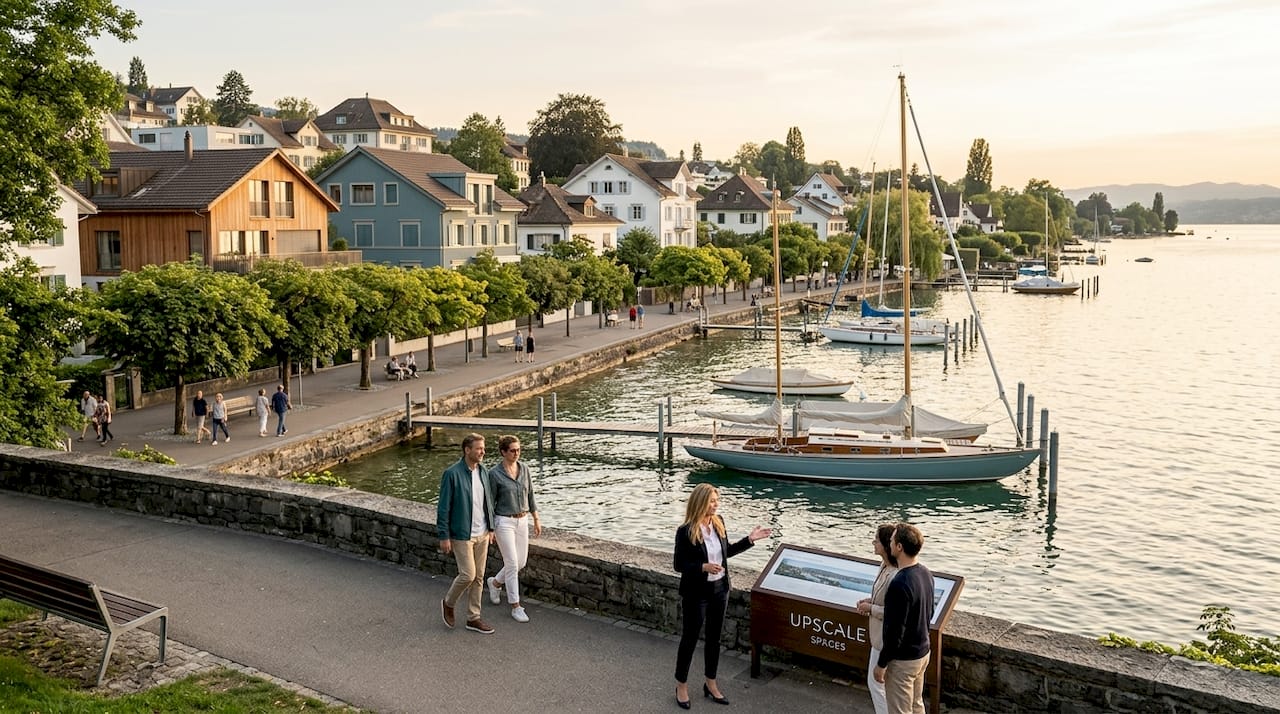
Kilchberg is a self-governing municipality on the western shore of Lake Zürich, positioned roughly 15 minutes by train from Zurich’s city center and recognized internationally as the home of the Lindt & Sprüngli chocolate factory. For anyone planning to relocate or invest in the area, this combination of lakeside access, green zoning, and urban proximity creates a lifestyle profile that few Swiss communities can match. The municipality maintains its autonomy deliberately, preserving agricultural land and public parks while sitting at the edge of one of Europe’s most dynamic financial centers. What follows is a structured guide covering amenities, demographics, real estate pricing, and planning policy so you can make a well-informed decision.
What does Kilchberg offer residents and visitors?
Kilchberg’s lifestyle appeal is built on direct, year-round access to Lake Zürich and a network of nine public lake parks spread across the municipality. These parks are free to use and provide walking paths, benches, and waterfront access that most comparable lakeside towns charge for or restrict. For families and professionals alike, this translates into a daily quality of life that is genuinely difficult to replicate in denser urban settings.
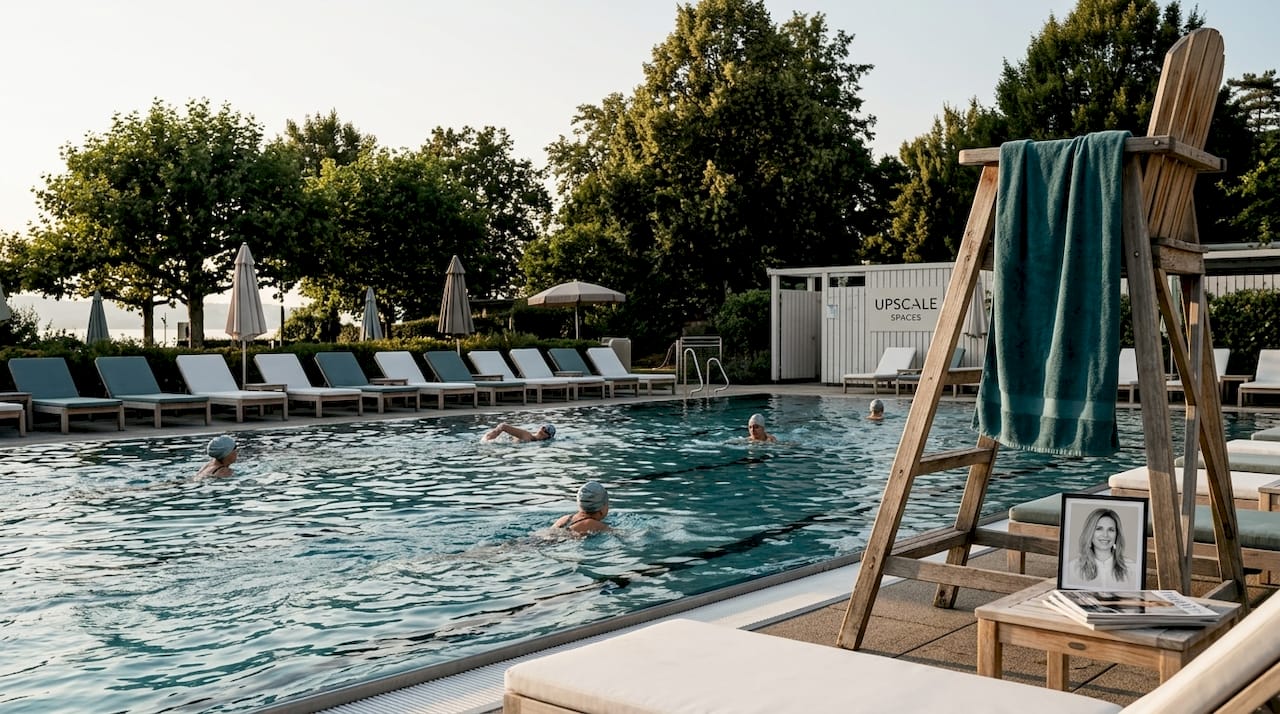
Seebad Kilchberg: the community’s signature amenity
The Seebad Kilchberg swimming facility operates from May 1 to September 20 each year, offering heated pool water maintained between 22 and 26 degrees Celsius. What makes this facility unusual is its heat source: the pool is warmed using industrial waste heat from the Lindt & Sprüngli factory next door. This industrial-to-community energy loop is a genuine example of eco-efficiency that elevates the facility well above a typical municipal pool. The Seebad is also wheelchair accessible and includes family facilities and a small restaurant, making it practical for a wide range of users.
Getting there without a car is straightforward. Bus 163 stops at the Lindt & Sprüngli stop, from which the Seebad is a 10-minute walk. Parking on site is limited, so most visitors arrive by train to Bahnhof Kilchberg and continue on foot or by bus. For residents, this means the facility is genuinely car-free accessible, which matters when you are evaluating daily convenience.
Beyond the Seebad, Kilchberg’s cultural calendar includes literary heritage tied to the author Thomas Mann, who is buried in the local cemetery, along with local museums and seasonal community events. These attractions give the municipality a cultural depth that goes beyond its size.
Pro Tip: If you are visiting Kilchberg before committing to a relocation, time your visit between May and September to experience the Seebad and the lakefront parks at their best. The seasonal character of these amenities is a real factor in year-round resident satisfaction.
Key lifestyle features at a glance:
- Nine public lakefront parks with free access
- Seebad Kilchberg open May through September, heated by Lindt & Sprüngli waste energy
- Wheelchair-accessible swimming facility with family amenities
- Train connection to Zurich city center in approximately 15 minutes
- Literary and cultural heritage including the Thomas Mann burial site
- Local museums and recurring community events throughout the year
What is the demographic makeup of Kilchberg?
Kilchberg’s resident population stood at 9,470 at the end of 2023, with Swiss citizens making up 66.94% and foreign nationals accounting for 33.06%. That foreign resident share has been rising steadily since 2002, crossing the 30% threshold and continuing upward. For anyone relocating from outside Switzerland, this figure is meaningful. It signals that Kilchberg is not an insular community where newcomers stand out. It is a place where international residents are a normal and established part of daily life.
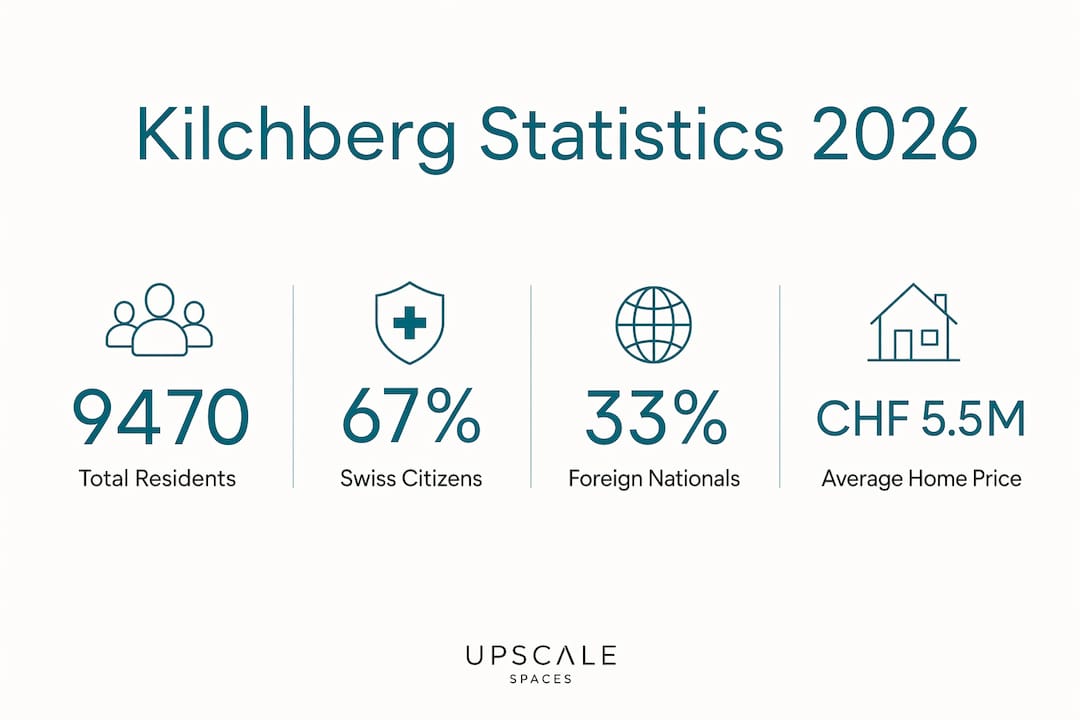
A community where one in three residents holds a foreign passport tends to develop practical infrastructure for integration. In Kilchberg, this shows up in multilingual social clubs, expat networks active in the Zurich metropolitan area, and community events designed to bring residents together across language and cultural lines. You will find that multilingual community activities are not an afterthought here. They are a reflection of who actually lives in the municipality.
For investors, the demographic profile matters for a different reason. A high proportion of internationally mobile residents creates consistent rental demand from professionals relocating for work in Zurich’s financial and pharmaceutical sectors. This demand tends to be stable and price-insensitive at the upper end of the market, which supports premium rental yields on well-located properties.
Key demographic facts relevant to relocation and investment decisions:
- Total population: 9,470 (end of 2023)
- Swiss nationals: 66.94% of residents
- Foreign nationals: 33.06%, a share that has grown consistently since 2002
- Active expat and multilingual social networks in the municipality
- Stable demand from internationally mobile professionals working in Zurich
How is Kilchberg’s real estate market performing in 2026?
Kilchberg sits firmly in the premium tier of the Swiss residential market. Current listings from Engel & Völkers show luxury home prices around CHF 5.5 million for large houses and CHF 2.49 million for modern lake-view apartments. These figures reflect the municipality’s combination of lakefront access, green surroundings, and proximity to Zurich’s financial district. Properties at this price point attract wealth managers, private equity professionals, and senior corporate executives who want to live outside the city without sacrificing access to it.
The broader Swiss market context supports continued price appreciation, though at a measured pace. UBS’s 2026 real estate outlook projects 3.5% year-over-year growth for owner-occupied homes, with moderate 3% growth expected to continue through 2026 before slowing due to affordability constraints. For Kilchberg specifically, this means you should expect steady appreciation rather than rapid gains. The municipality’s premium pricing already reflects its desirability, so outsized returns depend more on property selection and timing than on broad market momentum.
Pro Tip: When evaluating a Kilchberg property, factor in the municipality’s active land-use planning process. A parcel adjacent to a green zone that is under review for densification carries a different risk profile than one in a fully settled residential area. Reviewing the current Richtplan before signing is not optional; it is standard due diligence.
Investors should also consider that affordability pressures will eventually cap price growth even in premium markets like Kilchberg. The municipality’s relatively small size limits new supply, which protects existing values but also means that entry-level investment opportunities are scarce. If you are entering the market now, focus on properties with strong rental appeal to internationally mobile tenants rather than speculative land positions.
How does local planning shape Kilchberg’s investment potential?
Kilchberg’s development trajectory is shaped by a formal participatory planning process that gives residents and investors genuine insight into where the municipality is heading. In June 2023, the municipality conducted an online land-use survey with 550 participants, gathering community input on green space preservation, densification priorities, and infrastructure needs. This level of public engagement is not symbolic. The results feed directly into the Richtplan and the regional development framework known as the REK, which together determine what gets built, where, and at what density.
For investors, understanding this process is a practical advantage. Here is how to use it:
- Monitor the Richtplan revision cycle. Kilchberg’s municipal Richtplan is updated periodically and signals which zones are earmarked for development versus preservation. Properties in zones under review carry higher uncertainty but also higher upside if rezoning goes in a favorable direction.
- Attend or review public consultation records. The 2023 survey showed strong community preference for green zone protection and controlled densification. This preference is likely to persist, which means large-scale development projects face meaningful community resistance.
- Track REK milestones. The regional development framework coordinates planning across neighboring municipalities. Changes at the regional level can affect Kilchberg’s zoning even when local preferences lean conservative.
- Factor planning timelines into your investment horizon. Rezoning and approval processes in Swiss municipalities typically run three to five years. If your investment thesis depends on a zoning change, build that timeline into your financial model.
- Consult a local building permit specialist. Swiss building regulations are detailed, and Kilchberg’s green zoning adds an additional layer of complexity. Understanding building permit requirements before acquiring a property avoids costly surprises after closing.
The participatory planning model also signals something important about community character. Kilchberg residents are engaged and protective of their environment. Investors who align their projects with community values, particularly around green space and architectural quality, will find the approval process more predictable than those who push against local preferences.
Key takeaways
Kilchberg combines lakeside living, a 15-minute train connection to Zurich, premium real estate pricing, and a participatory planning process that rewards investors who do their homework before committing capital.
Why Kilchberg rewards patient, informed investors
I have worked with clients across the Zurich metropolitan area for years, and Kilchberg consistently attracts a specific type of buyer: someone who has already succeeded professionally and now wants their environment to reflect that. The lake access, the quiet streets, the train to Zurich in 15 minutes. It checks every box on paper.
What I find most interesting about Kilchberg, though, is the Seebad detail. A municipal pool heated by industrial waste energy from a chocolate factory is not something you find in most relocation guides. It tells you something real about how the community thinks: practically, with an eye toward quality of life and resource efficiency at the same time. That kind of institutional thoughtfulness tends to show up in other decisions too, including planning and governance.
The one thing I consistently tell clients is to take the seasonal nature of the lake amenities seriously. Kilchberg in July and Kilchberg in January are genuinely different experiences. The Seebad closes in late September, and the nine parks, while beautiful year-round, are a different proposition in cold weather. If your family’s happiness depends on outdoor water access, plan your trial visit in winter, not summer. You want to know what you are committing to across all twelve months.
On the investment side, the 2023 planning survey is underused intelligence. Most buyers look at current listings and current prices. The investors who consistently outperform in markets like Kilchberg are the ones who read the planning documents, attend the public consultations, and understand where the municipality wants to be in ten years. That information is public, it is free, and almost nobody acts on it.
Design your Kilchberg office space with Upscalespaces
Relocating to or investing in Kilchberg often means setting up a workspace that matches the quality of the surrounding environment. Upscalespaces specializes in office interior design for corporate clients and investors across the Zurich region, creating functional, employee-focused environments that reflect the standards of the communities they serve. Whether you are fitting out a private office in a new Kilchberg property or designing a professional workspace for a growing team, Upscalespaces brings end-to-end support from concept through furniture delivery. You can explore completed investment office projects to see the firm’s approach in practice, or connect directly with an office design specialist to discuss your specific requirements.
FAQ
Where is Kilchberg located in Switzerland?
Kilchberg is a municipality on the western shore of Lake Zürich, approximately 15 minutes by train from Zurich’s city center. It maintains its own governance and is known for its green zoning and lakefront access.
What are the main attractions in Kilchberg?
The primary Kilchberg attractions include nine public lakefront parks, the Seebad Kilchberg swimming facility, the Lindt & Sprüngli chocolate factory, and the burial site of author Thomas Mann. The Seebad operates from May 1 to September 20 each year.
What is the average property price in Kilchberg?
Current listings show luxury homes priced around CHF 5.5 million and modern lake-view apartments at approximately CHF 2.49 million. UBS projects 3.5% year-over-year price growth for Swiss owner-occupied homes in 2026.
Is Kilchberg a good place for international residents?
Yes. Foreign nationals make up 33.06% of Kilchberg’s population of 9,470, a share that has grown steadily since 2002. The municipality supports multilingual community activities and has established expat networks.
How does local planning affect property investment in Kilchberg?
Kilchberg’s Richtplan and REK framework govern zoning and development decisions. A 2023 public survey with 550 participants showed strong community preference for green space preservation, which constrains new supply and supports existing property values over the long term.
Recommended
- 7 Reasons why
- Project Marmot Invest AG | Upscale Spaces
- Project Deutsche Boerse 360T | Upscale Spaces
- Start-up Upscale Acquires 99chairs and Expands


