
.svg)
Ergonomic Office Interior Design for Companies in Klosters
Discover why ergonomic office interior design matters for companies in Klosters. Boost productivity, comply with regulations, and enhance employee well-being.

Ergonomic office interior design is defined as the practice of shaping workspaces to fit the physical and cognitive needs of employees, reducing strain while increasing output. For companies in Klosters, this is not a comfort upgrade. It is a direct investment in productivity, legal compliance, and talent retention. Swiss regulations under the Arbeitsgesetz (ArG) and ArGV 3 set clear ergonomic standards, and research published in 2026 confirms that well-designed ergonomic environments show a strong positive correlation with productivity and a measurable reduction in musculoskeletal disorders. The business case is clear, and the design principles are proven.
Why ergonomic office interior design matters for companies in Klosters
Switzerland’s workplace law is specific. The Arbeitsgesetz and ArGV 3 require employers to design workstations so that employee health is not impaired. SUVA and EKAS, Switzerland’s leading occupational safety bodies, publish detailed ergonomic recommendations covering screen height, viewing distance, lighting levels, and room climate. These are not suggestions. They are the baseline every Klosters company must meet.
Compliance alone is a strong reason to act. Beyond that, companies that meet and exceed these standards see measurable gains. Reduced absenteeism, fewer injury claims, and higher employee engagement all follow from a workspace that is physically well-designed. For office managers in Klosters, treating ergonomic design as a legal and operational priority is the most direct path to a healthier, more productive team.
Pro Tip: Conduct a workstation audit against SUVA’s published checklist before any redesign. Map screen heights, chair adjustability, and lighting levels room by room. This turns a vague “ergonomics project” into a concrete compliance and performance plan.
Proper screen height and lighting require precise adjustment, not generic solutions. A monitor placed too high or too low creates neck strain within weeks. Lighting that causes glare on screens increases eye fatigue and reduces concentration. These are not minor inconveniences. They accumulate into chronic conditions that cost companies in sick days and lost focus.
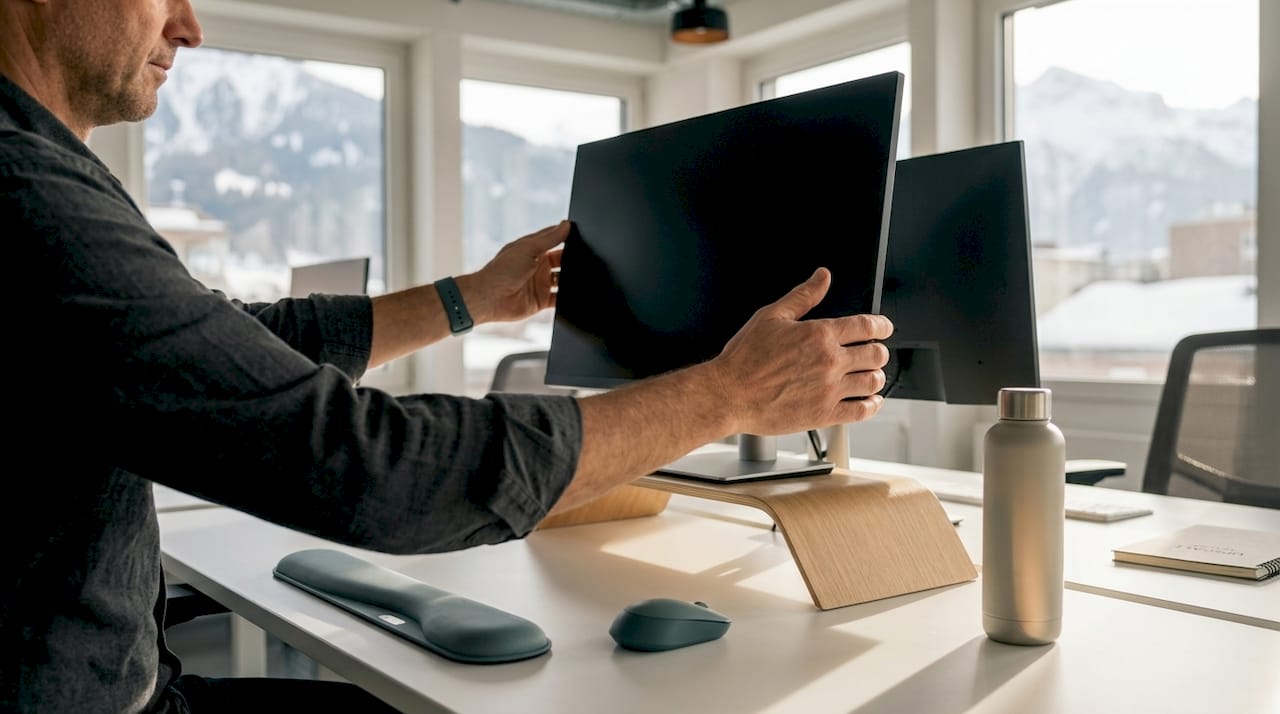
How does ergonomic design affect employee productivity and musculoskeletal health?
The research is direct. A 2026 study found a correlation between ergonomic environments and productivity of r=0.52, and a negative correlation with musculoskeletal disorders (MSDs) of r=−0.55. That means better ergonomic conditions reliably predict higher output and fewer physical complaints. The relationship is not coincidental. MSDs reduce productivity by limiting movement, increasing discomfort, and raising absenteeism.
A separate mixed-methods study found that 50% of office employees reported mild discomfort and 21.43% reported moderate discomfort in standard office setups. That same study found 62% of employees believe ergonomic setups improve their productivity. These numbers reflect a workforce that already understands the connection between physical comfort and work quality.
“Ergonomic design supports SDG 3: Good Health and Well-Being by improving workplace social sustainability.” — 2026 PubMed study on sustainable workplaces
The connection between physical comfort and mental well-being is equally important. Employees who are not managing chronic back pain or eye strain can direct their full attention to their work. Physical ease creates a calmer, more focused atmosphere. For Klosters companies competing for skilled professionals, that mental clarity translates directly into higher-quality output.
The productivity improvements from ergonomic design should be measured using both health outcomes and performance KPIs. Tracking MSD-related sick days alongside output metrics gives corporate leaders a complete picture of their return on investment.
What does ergonomic design look like beyond furniture?
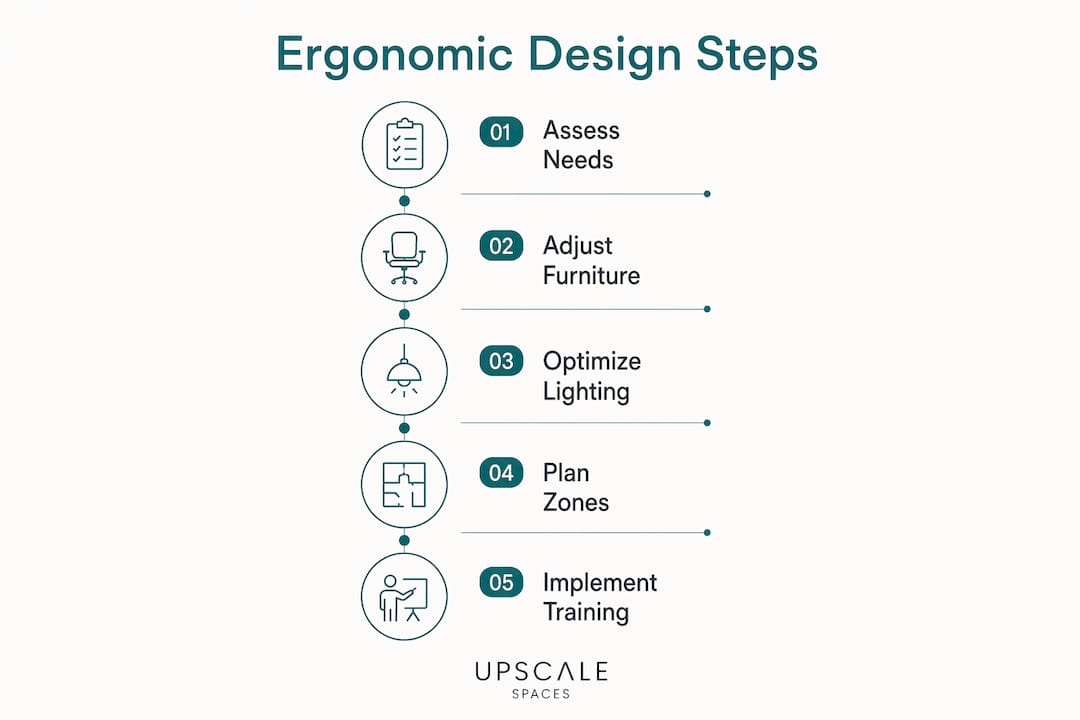
Activity-based working (ABW) is the industry term for office planning that matches the physical environment to the type of work being done. Traditional workstations are used only 40–50% of the time. ABW addresses this by creating distinct zones for focused work, collaboration, and informal meetings, each with ergonomic setups suited to the task.
For Klosters offices adopting ABW, the practical design steps are:
- Create quiet concentration zones. These areas need acoustic treatment, such as sound-absorbing panels and partitions, to reduce distraction. Ergonomic chairs and height-adjustable desks are standard here.
- Design collaboration zones separately. These spaces benefit from different furniture configurations, including standing-height tables and flexible seating, to support short, active meetings.
- Install height-adjustable desks throughout. Height-adjustable desks and adaptive chairs prevent fatigue by enabling employees to alternate between sitting and standing, reducing static posture time.
- Treat acoustics as an ergonomic factor. Noise is a physical stressor. Sound-absorbing materials in open-plan areas lower cognitive load and reduce stress, which directly supports focus and well-being.
- Calibrate lighting by zone. Concentration areas need consistent, glare-free task lighting. Collaboration zones can use warmer, more ambient light to create an inviting atmosphere.
Pro Tip: When planning zone-specific ergonomics, consult ergonomic workplace tips before selecting furniture. Matching chair and desk specifications to the tasks performed in each zone prevents the common mistake of applying one standard setup across an entire floor.
Task-specific ergonomic zoning requires acoustically treated quiet areas for focus work contrasted with collaborative spaces that use different furniture and layouts. This is not about aesthetics. It is about giving employees the physical conditions they need to perform each type of task well. For Klosters companies redesigning their offices, ABW-informed ergonomic planning is the most effective approach available.
How does ergonomic office design strengthen employer branding in Klosters?
A well-designed ergonomic office sends a clear signal to current and prospective employees. It communicates that the company takes worker well-being seriously. In Klosters, where companies compete with Zurich and other Swiss business centers for skilled talent, that signal carries real weight.
The link between office comfort and employer attractiveness is well-established in Swiss interior design practice. An office that looks and feels good to work in becomes a recruitment asset. Candidates notice when a workspace is thoughtfully designed. Employees remember it when they consider whether to stay.
The benefits of ergonomic investment for employer branding include:
- Reduced illness absence. Employees in ergonomically sound offices experience fewer MSDs and less chronic discomfort, which directly lowers sick-day rates.
- Higher loyalty. Physical comfort contributes to job satisfaction. Satisfied employees are less likely to seek roles elsewhere.
- Visible commitment to well-being. A sustainable workplace design that prioritizes ergonomics signals organizational values that resonate with today’s workforce.
- Stronger company culture. Spaces that support movement, focus, and collaboration reinforce a culture of performance and care simultaneously.
- Financial return. Lower turnover, reduced absenteeism, and higher productivity all contribute to a measurable financial return on ergonomic investment.
For corporate leaders in Klosters, ergonomic office design is not a line item to minimize. It is a visible, ongoing statement about how the company values its people. That statement shapes how employees and candidates perceive the organization, and it directly affects the company’s ability to attract and keep the talent it needs. You can explore how compact ergonomic layouts support these goals in Swiss corporate settings.
Key Takeaways
Ergonomic office interior design reduces musculoskeletal disorders, raises productivity, ensures Swiss legal compliance, and strengthens employer branding for companies in Klosters.
Ergonomics is performance engineering, not a perk
I’ve worked on enough corporate office projects across Switzerland to say this plainly: most companies in Klosters still treat ergonomics as a furniture decision. They buy adjustable chairs and call it done. That misses the point entirely.
Ergonomics creates a fit between people and their work environment. That is performance and safety engineering. It is not a comfort upgrade. When I see a company skip the workstation audit, ignore acoustic zoning, and install the same desk setup across every floor, I know they will be back in two years wondering why sick days are up and focus is down.
The biggest mistake I see is treating ergonomic redesign as a one-time procurement exercise rather than a measurement project. You need to map posture, visibility, lighting, and environmental parameters before you select a single piece of furniture. The design follows the data. When you reverse that order, you get an office that looks good in photos but fails the people working in it every day.
My advice to corporate leaders in Klosters is this: align your ergonomic investment with your business strategy. Set KPIs for MSD reduction and absenteeism before the redesign begins. Measure again six months after. The results will justify the investment and show you exactly where to go next. Ergonomics done right is one of the highest-return decisions a company can make.
Upscalespaces brings ergonomic office design expertise to Klosters
Upscalespaces specializes in corporate office transformations across Switzerland, with deep experience in ergonomic workplace solutions that meet Swiss regulatory standards and support measurable productivity gains. The firm’s six-step process covers everything from initial consultation and design conceptualization to furniture selection and project completion, giving you end-to-end support without gaps. Upscalespaces partners with leading furniture manufacturers and maintains a network of local logistics partners, so your Klosters office gets the right setup delivered and installed correctly. If you are ready to create a workspace that supports your team’s health and your company’s performance, contact Upscalespaces to start your office redesign.
FAQ
What Swiss laws govern ergonomic office design?
The Arbeitsgesetz (ArG) and Verordnung 3 zum Arbeitsgesetz (ArGV 3) require Swiss employers to design workstations so employee health is not impaired. SUVA and EKAS provide the specific ergonomic guidelines companies must follow.
How much does ergonomic design improve productivity?
A 2026 study found a correlation of r=0.52 between ergonomic environments and productivity. The same study found ergonomic conditions reduce musculoskeletal disorders with a correlation of r=−0.55, and MSDs are a primary driver of lost productivity.
What is activity-based working and why does it matter for ergonomics?
Activity-based working (ABW) is an office planning approach that creates distinct zones for different task types, each with ergonomic setups matched to the work being done. Traditional workstations are used only 40–50% of the time, making ABW a more efficient and health-supportive model.
Does ergonomic office design help with employee retention?
Yes. Ergonomic offices reduce illness absence, increase job satisfaction, and signal a visible commitment to employee well-being. These factors directly improve loyalty and make the office a stronger recruitment asset in competitive Swiss markets like Klosters.
Where should a Klosters company start with ergonomic office redesign?
Start with a workstation audit mapping screen height, chair adjustability, lighting, and acoustic conditions against SUVA guidelines. This baseline measurement identifies the highest-priority changes and gives you a foundation for tracking improvement over time.
Recommended
- Compact office space solutions for Swiss corporate teams
- 7 Reasons why
- Interior design magazine for the office - trends and tips!


