

Basel Facility Managers: Ergonomic Office Design With Payback in Days
Basel facility managers: run a 6–12 week pilot using SECO and NEXpro evidence to cut productivity loss, reach payback in just over six days.
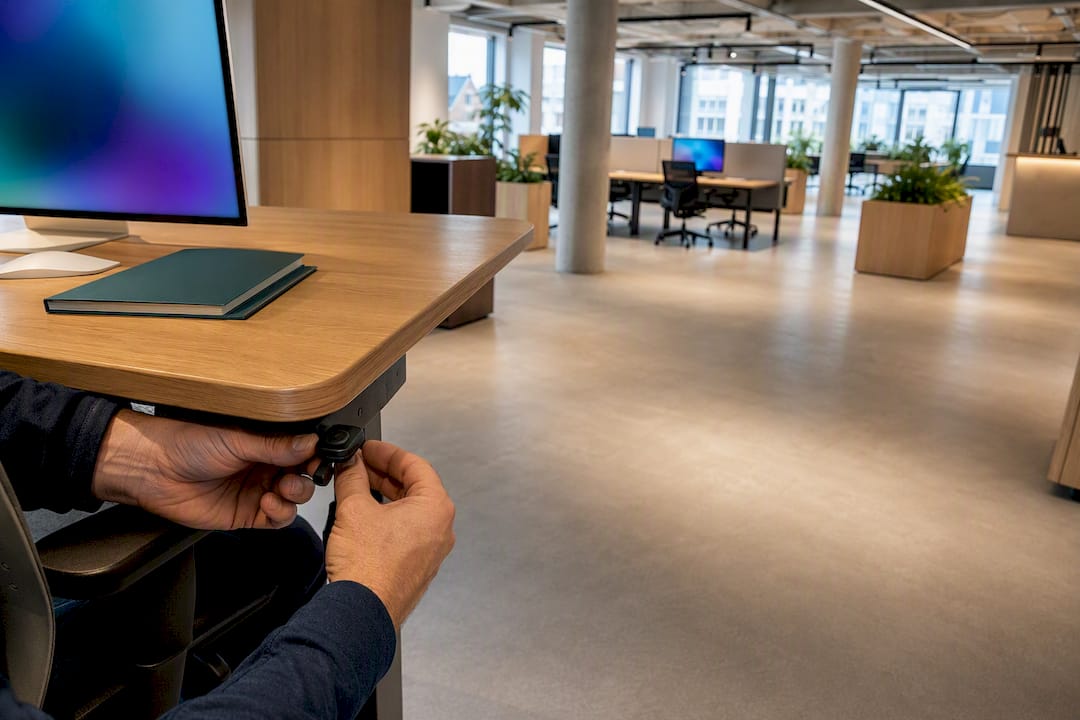
Ergonomic office design cuts neck- and back-related productivity loss, reduces sick days and often pays for itself within weeks. Swiss guidance from SECO and a Swiss randomised trial back this up with real numbers, not just good intentions. A professional interior design firm can turn that evidence into a practical fit-out plan for Basel offices, and the steps below show how.
TL;DR:
- Providing adjustable desks and chairs tailored to employee sizes can significantly reduce neck and back pain, as shown in Swiss trials linked to lower sick leave.
- Implementing a pilot program with proper training and measurement over 6 to 12 weeks offers clearer insights into potential savings than broad, building-wide rollouts.
- Multi-component interventions combining ergonomic upgrades with staff exercise and posture training outperform furniture alone in delivering measurable health and productivity benefits.
- Proper monitoring of KPIs such as sick days, pain reports, and adjustment usage is essential to justify ergonomic investments and calculate fast payback periods.
- Ergonomic upgrades are essential for older buildings often retrofitted for modern use, especially in Basel’s pharmaceutical, finance, and logistics sectors, to optimize worker well-being and output.
Upscale Spaces
Design a Healthier Basel Office
Upscale Spaces creates tailored, functional work environments with end-to-end interior design support for offices across Switzerland and Europe.
How can ergonomic office design improve workplaces in Basel?
Ergonomic office design covers three overlapping goals: physical ergonomics (how the body interacts with furniture and equipment), cognitive ergonomics (how the environment supports focus and decision-making), and organisational ergonomics (how schedules, roles and break patterns are structured). Get the physical layer wrong and staff develop neck and back pain within months. Get the organisational layer wrong and even a perfectly adjustable chair goes unused.
For a Basel employer, the practical translation is simple: workstations that adjust to the person rather than forcing the person to adjust to the desk, paired with training that actually gets used. SECO's ergonomics guidance sets the legal baseline for employer obligations here, and it exists because poorly designed workstations are a documented cause of absence and reduced output, not a cosmetic concern.
Basel's office market skews towards pharmaceutical, finance and logistics tenants, many operating in older buildings retrofitted for modern headcounts. That mix means ergonomic upgrades often have to work around existing floor plates and column grids rather than a blank canvas, which is exactly the kind of constraint a structured design process is built to solve.
Business benefits: wellbeing, productivity and cost savings to expect
Swiss insurer guidance links properly specified workstations directly to fewer sick days, and frames adjustable desks and chairs as part of an employer's basic duty of care, not an optional perk according to Zurich's ergonomics guidance. The mechanism is straightforward: sustained poor posture and static loading cause musculoskeletal pain, and pain drives both absenteeism and presenteeism, where staff show up but work at reduced capacity.
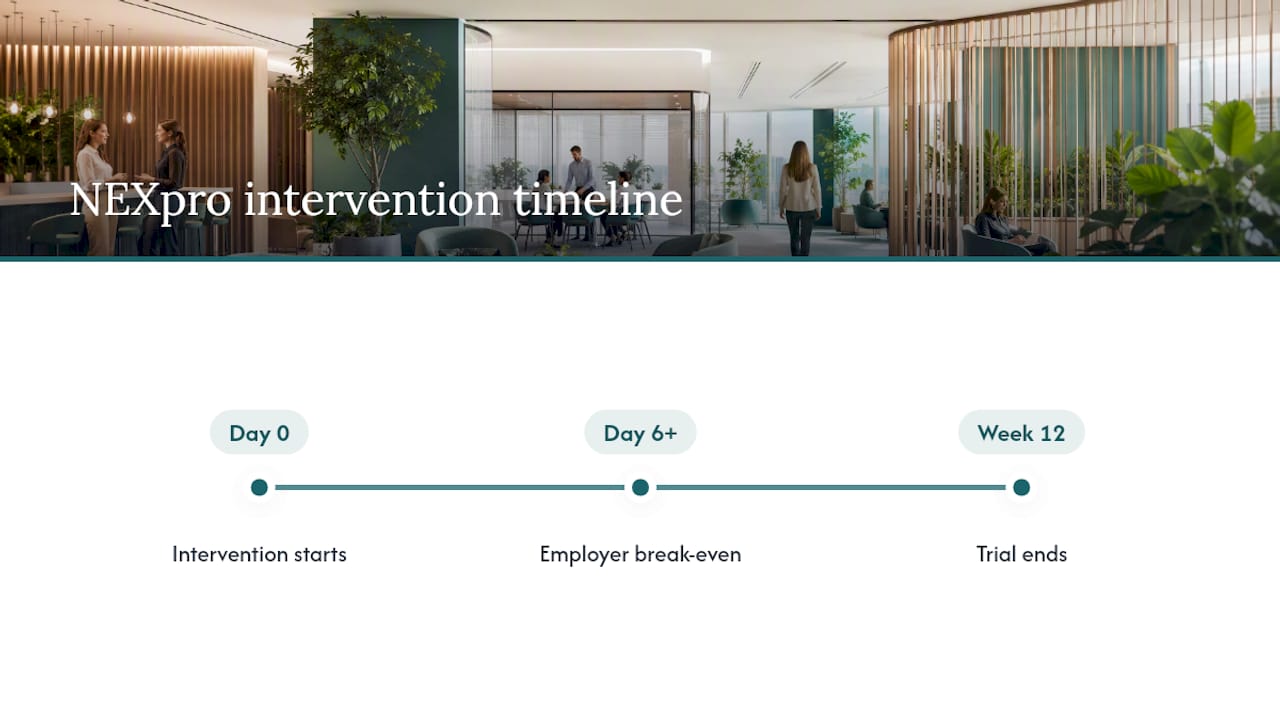
The clearest Swiss evidence comes from the NEXpro trial, a 12-week multi-component intervention tested on Swiss office workers.
The NEXpro numbers: the trial recorded a 2.8 percentage point reduction in neck pain-related productivity loss, alongside weekly savings of CHF 27.40 per participant.
Scale that CHF 27.40 across a 50-person floor for a year and the saved cost runs into five figures, before counting reduced turnover or recruitment costs from a team that isn't quietly nursing back pain at their desks.
Track these KPIs to make the case internally:
- Sick days per employee per quarter, compared against the same period last year
- Self-reported pain scores from a short survey before and after any change
- Desk and chair adjustment usage, where sit-stand telemetry is available
- Presenteeism proxies such as missed deadlines or meeting rescheduling rates
Essential ergonomic elements for office fit-outs
Chairs and desks are the foundation, but the specification matters more than the price tag. A chair without seat-depth adjustment or a desk with a narrow height range will not fit most of the workforce, however good it looks.
- Desks: height-adjustable, ideally sit-stand capable, with enough clearance to serve the 5th to 95th percentile of adult body sizes
- Chairs: adjustable lumbar support, seat depth and armrests, not just seat height
- Monitor placement: top of the screen roughly a hand's breadth below eye level, viewing distance of 50 to 80 centimetres, following AXA's practical ergonomics guidance
- Keyboard and mouse: positioned so forearms stay roughly horizontal, wrists neutral, not angled up or down
- Lighting: glare-free task lighting supplementing daylight, with screens positioned perpendicular to windows rather than facing them
- Movement: sit-stand routines, walkable layouts that encourage getting up for water or printing, and a stated break policy rather than an implied one
Pro Tip: When specifying furniture, ask suppliers for on-site adjustment sessions as part of the delivery contract. A height-adjustable desk that nobody has been shown how to adjust behaves exactly like a fixed one.
None of this works without buy-in from line managers. A chair upgrade rolled out without a five-minute briefing on how and why to adjust it tends to sit in its factory setting for years.
A practical five-step implementation roadmap
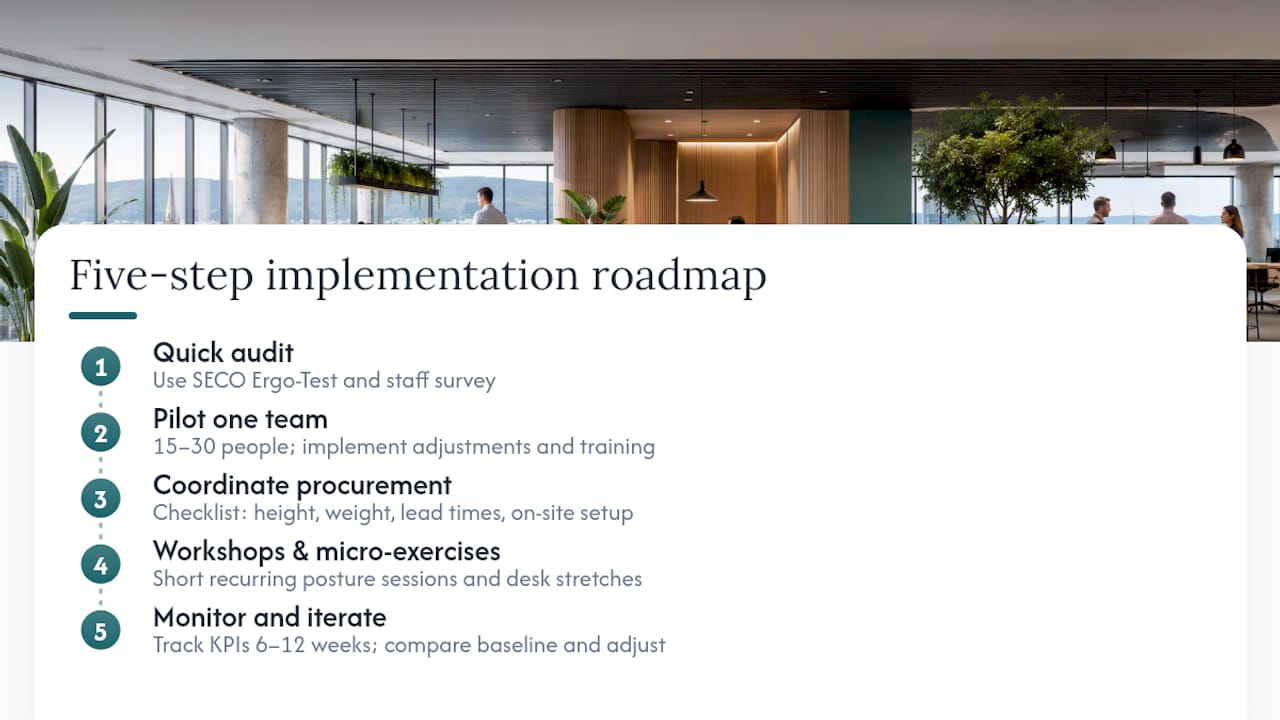
1. Run a quick audit. Use SECO's Ergo-Test tool alongside a short internal staff survey to flag pain hotspots and workstation gaps before spending a franc on furniture.
2. Pilot with one team. Choose a representative group of 15 to 30 people, implement the adjustments and run a focused training session, rather than rolling changes across the whole floor at once.
3. Coordinate furniture procurement. Build a supplier checklist covering height range, weight capacity, lead times and on-site setup, and confirm delivery logistics before committing to a full order.
4. Run workshops and a micro-exercise programme. Short, recurring sessions on posture and simple desk stretches embed the behavioural half of the change, which is where most single-furniture interventions quietly fail.
5. Monitor and iterate. Track the KPIs from the benefits section for six to twelve weeks, compare against the pilot baseline, then adjust the specification before scaling to the rest of the building.
This sequence deliberately front-loads a small, measurable pilot rather than a building-wide relaunch, because a pilot that fails to show benefit in six weeks is a far cheaper mistake than a full rollout that does the same.
The evidence and business case behind Swiss ergonomic trials
The NEXpro trial remains the strongest Swiss data point for this decision. Its 12-week multi-component design combined workstation adjustments with exercise and training, and produced measurable results rather than the marginal, unreplicated gains typical of single-lever interventions.
A follow-up BMC Public Health cost-utility and cost-benefit analysis went further, modelling the intervention from the employer's perspective. It found the programme reached break-even in just over six days once productivity gains were counted, a genuinely fast payback for a workplace health measure.
Two caveats matter. First, NEXpro was a controlled trial with a defined sample, not a guarantee that every office will see identical percentages; local measurement during a pilot is what turns a national average into a credible in-house number. Second, the multi-component design is doing real work here: combining equipment changes with exercise and training outperforms furniture alone, so a chair upgrade with no training attached will not replicate these figures.
Designing for open-plan offices and indoor environmental quality
Open-plan layouts solve for collaboration and cost per square metre, but they routinely introduce two problems ergonomic desk specs cannot fix: noise and lost privacy. The Swiss SBiB study found that room size and acoustic conditions correlate closely with symptom prevalence and staff dissatisfaction. Smaller, better-zoned offices report fewer complaints.
Practical responses that hold up in real fit-outs:
- Acoustic absorbers and soft furnishings on hard surfaces where sound otherwise bounces freely, an approach covered in more depth in Upscale Spaces' guide to soundproofing an office
- Zoning that separates focus work from collaboration areas rather than mixing them on one open floor
- A stated meeting etiquette (booked rooms for calls, headphones as a visible "do not disturb" signal)
- At least one dedicated quiet room per floor for retreat and confidential conversations
Ventilation and thermal comfort matter just as much. A building environment study found that tuning temperature purely for productivity can raise both sick building symptoms and energy costs, so post-occupancy checks against a multi-criteria standard beat a single comfort target every time.
How to measure impact and build an ROI case
1. Set your baseline KPIs before touching anything. Track absenteeism, presenteeism, self-reported pain, workstation adjustment usage and general engagement scores over four weeks prior to any change.
2. Run the sample calculation. Using NEXpro's CHF 27.40 weekly saving per participant as an anchor, a 40-person team could see roughly CHF 1,100 saved per week in reduced productivity loss once the intervention beds in.
Pilot size matters: a group under 15 people rarely produces a statistically credible signal. Aim for at least 20 to 30 participants over 6 to 12 weeks before presenting results to leadership.
3. Compare pilot data against national figures, treating NEXpro's numbers as a sense check rather than a guaranteed outcome for your specific floor.
Practitioner perspective: how Upscale Spaces implements ergonomic design
A structured six-step process, from consultation and concept through furniture selection, procurement logistics and sign-off, ensures coordination of suppliers and delivery so adjustments land correctly on day one, not after months of complaints.
Why most ergonomic advice undersells the timeline
The conventional pitch on ergonomic design leans heavily on wellbeing language and light on numbers, which makes it easy for a finance director to file it under "nice to have" and move on. That is a mistake the evidence does not support. A break-even measured in days, not years, changes the conversation from a cost centre to a fast-payback operational fix, and leaders should treat it that way from the first budget meeting.
Where the standard advice falls shortest is training. Plenty of Basel offices have bought height-adjustable desks that sit permanently in their delivery-day position, because nobody ran the five-minute session showing staff how and why to use them. The furniture spend without the behavioural layer is close to wasted money, and the NEXpro data backs that combination, not the equipment alone.
If you take one thing from this article, prioritise the pilot. Six to twelve weeks with one team, measured properly against a baseline, tells you more about what will work in your specific building than any national average ever will.
— Valerie Vecerova
Ready to redesign your Basel office around ergonomics?
Fitting out an office for genuine ergonomic benefit means coordinating furniture specification, supplier logistics and staff training into one plan, rather than buying chairs and hoping. Upscale Spaces runs exactly that process end to end: a site review, a tailored proposal, and full procurement and delivery coordination, so your Basel team gets adjustable desks that are actually set up correctly on install day, not discovered three months later still in their factory position. If your office is due an ergonomic upgrade, start with a complimentary discovery call or site review with Upscale Spaces' office design team and get a pilot proposal built around your floor plate, not a generic template.
Sources
- Cost-utility and cost–benefit analysis of a multi-component intervention (NEXpro) for neck-related symptoms in Swiss office workers | BMC Public Health
- Ergonomics in the workplace: Zurich insurance guidance
- SECO: ergonomie overview
FAQ
How can we improve workplace ergonomics?
Start with an audit using a tool like SECO's Ergo-Test, then pilot height-adjustable furniture and short training sessions with one team before scaling across the building.
What is ergonomic design in the workplace?
It covers physical ergonomics (furniture and equipment fit), cognitive ergonomics (an environment that supports focus) and organisational ergonomics (schedules and break policies), all aimed at reducing strain and supporting output.
Why is ergonomics important in an office setting?
Poor workstation setups drive musculoskeletal pain, which increases both sick days and presenteeism; Swiss trial data shows well-designed multi-component programmes can reduce that productivity loss within weeks.
What are some effective ergonomic practices in the workplace?
Height-adjustable desks and chairs, correct monitor and keyboard positioning, glare-controlled lighting, movement breaks and staff training together outperform any single furniture upgrade on its own.
Can ergonomic upgrades pay for themselves quickly?
Yes. A Swiss cost-benefit analysis of the NEXpro programme found break-even in just over six days once productivity gains were factored in, though results depend on running the full multi-component approach rather than furniture alone.
Recommended
- Basel Office Interior Design Trends for Growing Businesses
- Employee-Centered Workplace Design Strategies for Bern
- Why Office Redesign Increases Output
- Modern Office Concepts


