
.svg)
Corporate Workspace Branding Through Interior Design in Oberägeri
Discover how Corporate Workspace Branding Through Interior Design in Oberägeri boosts employee engagement and enhances company culture.

Corporate workspace branding through interior design in Oberägeri is the strategic application of a company’s brand personality into its physical office environment to strengthen employee engagement and brand cohesion. This practice, known in the industry as strategic workspace design, goes far beyond placing a logo on a wall. Brand consistency in physical spaces increases brand communication effectiveness by up to 12 times. For corporate leaders and facility managers in Oberägeri, that number represents a direct opportunity to build a more motivated workforce and a more recognizable company culture.
How does strategic interior design elevate corporate branding?
Strategic interior design elevates corporate branding by encoding a company’s values into every physical element of the office. Colors, materials, shapes, and spatial layouts all carry psychological weight. When these elements align with a company’s brand archetype, the office itself becomes a communication tool.
The Limbic Office® methodology, developed by Sedus Stoll AG, demonstrates this clearly. Fine-tuned visual coding through shapes, colors, and materials matched to a company’s psychological brand archetype creates a stronger emotional connection than logos alone. A technology firm that values precision might use clean lines, matte surfaces, and cool lighting. A creative agency might favor warm wood tones, open layouts, and textured fabrics.
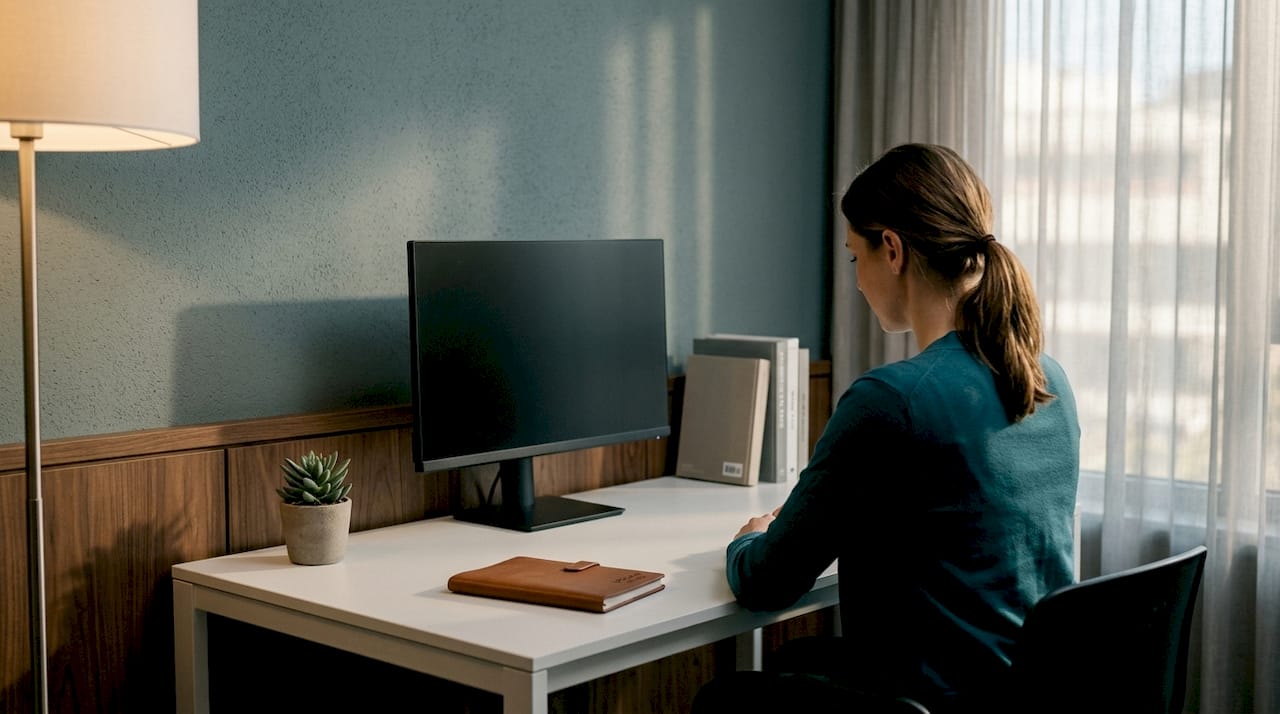
Environmental factors extend this further. Lighting affects alertness and mood. Acoustics shape how employees feel in collaborative versus focused work zones. Haptic qualities, meaning the texture and weight of surfaces and furniture, signal quality and care. Leading firms integrate brand personality with spatial atmosphere by carefully choosing these elements to influence employee behavior and mood.
Key design elements that carry brand signals include:
- Color palette: Warm tones suggest approachability; cool tones project authority and focus.
- Material choices: Natural stone, reclaimed wood, or polished concrete each communicate a distinct brand personality. For example, marble color selection can reinforce a premium brand identity in reception areas and boardrooms.
- Spatial layout: Open plans signal collaboration; defined zones with acoustic panels signal focus and precision.
- Lighting design: Diffused natural light creates a calm atmosphere; directed task lighting signals productivity.
- Acoustic treatment: Soft furnishings and panels reduce noise, signaling care for employee wellbeing.
Pro Tip: Before selecting any material or color, map it back to your brand archetype. Ask whether this choice reinforces the psychological impression your brand intends to make on employees and visitors alike.
What are the key strategies for implementing branded workspace design in Oberägeri?
Implementing branded workspace design in Oberägeri requires a structured process that connects corporate culture to physical space from day one. The most common failure point is treating strategy and design as separate phases. Co-creation between strategy and interior design teams from the project start minimizes brand experience fractures and aligns space with corporate culture.
Oberägeri sits within the Zug canton, one of Switzerland’s most business-dense regions. Companies here range from wealth managers and private equity firms to scaling technology businesses. Each has a distinct cultural DNA that must be identified before a single furniture piece is selected.
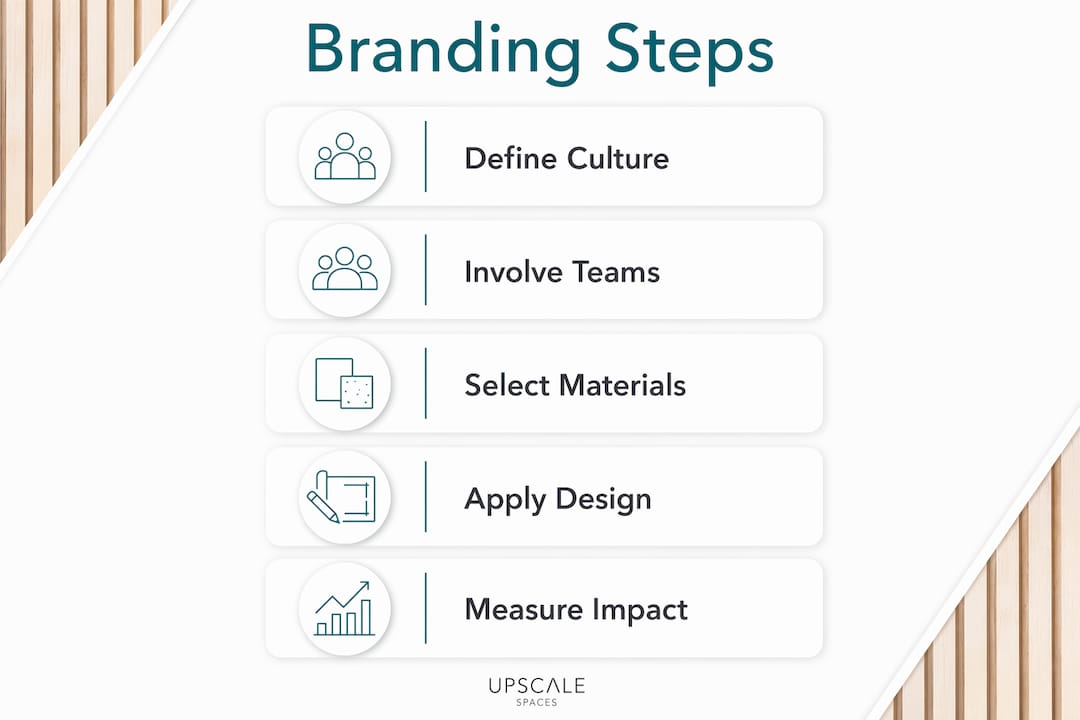
A practical implementation process follows these steps:
- Identify your corporate cultural DNA. Conduct workshops with leadership and employees to surface the values, behaviors, and aspirations that define your organization. This is not a branding exercise. It is a diagnostic that reveals what your space must communicate.
- Define your brand archetype. Map your cultural DNA to a spatial personality. Does your brand project balance, dominance, or stimulation? Each archetype calls for different spatial decisions.
- Translate archetype into material choices. Select colors, textures, and furniture that express the archetype consistently. A wealth management firm in Oberägeri might choose deep navy upholstery, marble surfaces, and color-driven luxury materials to signal trust and precision.
- Design spatial zones for brand behaviors. Create spaces that encourage the behaviors your brand promises. If collaboration is a core value, design open meeting areas with writable walls and movable furniture.
- Account for hybrid work realities. Oberägeri businesses increasingly operate on flexible hybrid models. Design must support both in-office and remote employees, with spaces that feel worth commuting to.
- Audit for consistency before launch. Walk every zone and ask whether the space communicates your brand without a single word or logo. If it does not, identify the gap and correct it.
Pro Tip: Involve your HR and communications teams in the design brief. They hold the clearest picture of how your brand is experienced by employees day to day, and their input prevents costly misalignments between culture and space.
Conventional branding vs. strategic interior design branding
The gap between conventional branding and strategic interior design branding is wider than most corporate leaders expect. Understanding the difference determines whether your office reinforces or undermines your brand.
The most common misconception among corporate clients is that branding equals logo placement. This misses the broader strategic design implications that affect workspace culture entirely. A logo on a reception wall is a surface signal. A space designed around your brand archetype is a behavioral system.
The most forward-thinking companies now treat their brand as an operating system. Employees can deliver core brand propositions through workspace interactions without requiring constant senior-level approval. The space itself guides behavior.
Companies that manage design as an operating system experience increased employee motivation, trust, and competitive differentiation. That outcome is not achievable through a logo refresh alone.
How can corporate leaders in Oberägeri measure workspace branding success?
Measuring the success of workspace branding initiatives requires tracking both behavioral and perceptual outcomes. Aesthetics alone do not confirm that branding is working. The real test is whether employees express and experience the brand through their daily workspace interactions.
Measuring success involves ensuring brand behaviors are embedded in everyday workspace interactions without requiring constant management. When that condition is met, the brand operating system is functioning correctly.
Practical metrics for corporate leaders and facility managers in Oberägeri include:
- Employee engagement scores: Survey employees on whether the office environment reflects company values. Compare scores before and after a redesign.
- Space utilization data: Track which zones employees choose voluntarily. High use of collaboration spaces signals that the design supports the intended brand behaviors.
- Brand alignment in daily behaviors: Observe whether employees naturally use spaces in ways that reflect brand values. A firm that values transparency should see open meeting rooms used frequently, not avoided.
- Onboarding feedback: New employees form their first brand impression from the physical office. Their feedback reveals whether the space communicates the intended message to an unbiased audience.
- Retention and recruitment signals: A well-branded office is a talent retention tool. Track whether candidates mention the office environment during interviews or whether employees cite it in stay surveys.
Integrating these metrics into an ongoing office design strategy keeps workspace branding responsive to organizational change. A company that grows, pivots, or adopts new values needs a space that evolves with it.
Key Takeaways
Strategic workspace branding embeds brand personality into every physical element of the office, increasing brand communication effectiveness by up to 12 times compared to logo-only approaches.
Why I think most Oberägeri offices are underusing their biggest brand asset
After working on corporate office projects across Switzerland, the pattern I see most often is this: a company invests heavily in its digital brand presence and then treats the physical office as an afterthought. The walls get the logo. The reception gets the brand colors. And that is where the thinking stops.
The offices that genuinely impress me are the ones where you feel the brand before you read a single word. The texture of the reception desk, the acoustic quality of the meeting rooms, the way light falls across a collaborative zone. These are not decorative choices. They are brand decisions. And workspace branding misperceptions persist because most leaders have never been shown what the alternative looks like.
The concept of “dark matter” in workspace design is the one I return to most often. Invisible organizational structures and incentives shape how people actually use a space, regardless of design intent. A beautifully designed collaboration zone sits empty if the company culture quietly rewards individual output. The space and the culture must be designed together, not in sequence.
My honest view is that the hybrid work shift has made this more urgent, not less. When employees choose whether to come in, the office must earn that visit. A space that reflects and reinforces the company’s values gives people a reason to be there. A generic office does not.
How Upscalespaces helps Oberägeri companies build branded offices
Upscalespaces works with corporate clients across Switzerland to design offices that reflect and reinforce company culture. The firm’s process runs from initial consultation through design conceptualization, furniture selection, and project completion, with strategy and design developed together rather than in sequence. That co-creation approach directly addresses the brand fractures that undermine most conventional office redesigns. For Oberägeri businesses ready to move beyond surface-level branding, Upscalespaces offers corporate office design services tailored to your organization’s values, team size, and hybrid work model. You can also explore modern office concepts to see how other Swiss companies have translated brand identity into physical space.
FAQ
What is corporate workspace branding through interior design?
Corporate workspace branding through interior design is the practice of embedding a company’s brand personality into its physical office environment through spatial layout, materials, lighting, and acoustics. It goes beyond logos to create a space that communicates brand values to employees and visitors through every physical interaction.
Why does office interior branding matter for employee engagement?
A branded office environment gives employees a daily, tangible connection to company values, which strengthens identification and motivation. Research from Sedus Stoll AG shows that consistent brand identity in physical spaces can increase brand communication effectiveness by up to 12 times.
What is the Limbic Office® approach to workspace branding?
Limbic Office® is a methodology developed by Sedus Stoll AG that matches spatial design elements, including colors, shapes, and materials, to a company’s psychological brand archetype. The approach creates emotional brand experiences through the environment rather than through signage alone.
How do you avoid brand inconsistency in a workspace redesign?
Brand inconsistency is avoided by running strategy and design as a single co-created process from the project start. Separating these phases creates visible gaps between the intended brand experience and the actual space employees inhabit.
How does hybrid work affect workspace branding in Oberägeri?
Hybrid work raises the stakes for office branding because employees now choose when to come in. A space that clearly reflects company values gives employees a reason to be present, while a generic office loses that competitive pull. Oberägeri businesses operating hybrid models need spaces that feel purposeful and worth the commute.
Recommended
- Office interior design
- Interior design magazine for the office - trends and tips!
- 7 Reasons why
- Your Office as Your Brand give a good impression


