

ROI Within Your Lease: Sustainable Office Design for Montreux Firms
Make sustainable office design pay within a lease. Montreux evidence, clear ROI steps, and Upscale Spaces' practical fit out service.
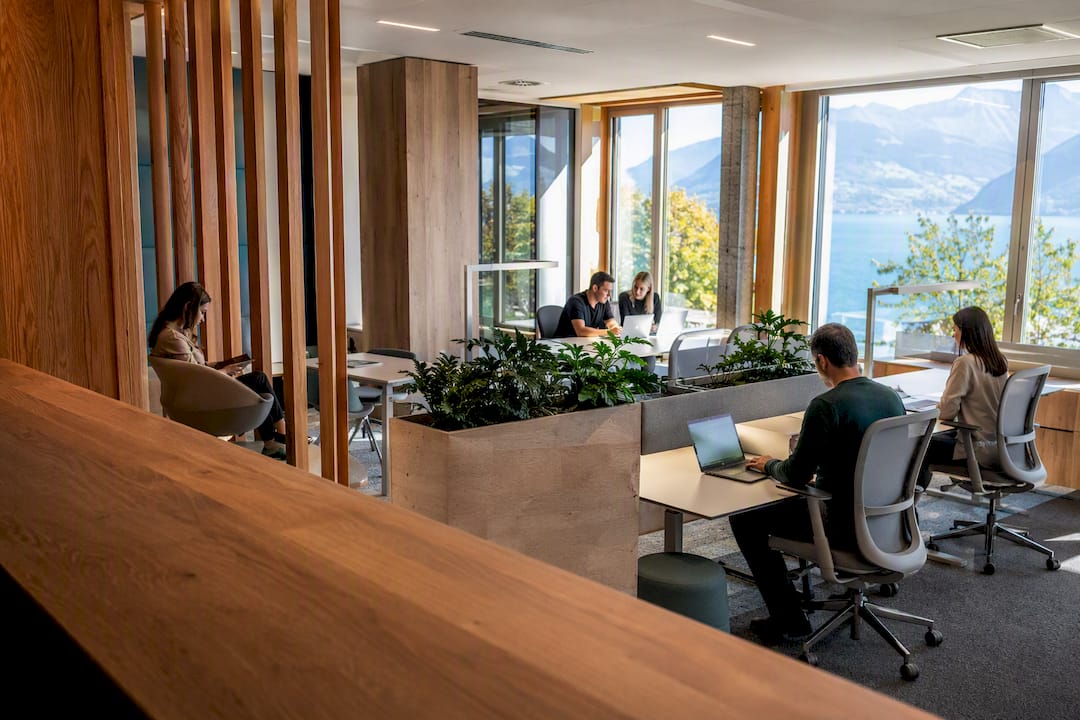
Sustainable office design cuts operating costs, improves staff health and concentration, and strengthens the case that any Montreux business makes to clients and investors about its values. The strongest gains come from combining recognised standards such as Minergie with practical measures like heat recovery, daylight optimisation and circular furniture procurement, backed by post-occupancy checks. Paired with a partner who understands local building stock and lease structures, the payback often lands within a single lease cycle.
TL;DR:
- Post-occupancy evaluations and user-centered planning are critical to realize health and productivity benefits from better indoor air quality, daylight, and thermal comfort.
- Prioritized measures with quick payback include high-performance envelopes, demand-controlled ventilation, daylight maximization, and low-VOC materials; certifications like Minergie, WELL, and LEED add credibility.
- Reusing and refurbishing existing furniture can significantly lower embodied carbon emissions and costs, especially when components are repairable and supplied regionally.
- A structured, full-cycle approach from design to handover, including staff training and performance monitoring, ensures sustainable features deliver long-term benefits and fulfill CSR and branding goals.
Upscale Spaces
Plan A Sustainable Office Transformation
Upscale Spaces creates customised, employee-focused commercial interiors through consultation, design, furniture selection, logistics and completion.
What are the benefits of sustainable office design in Montreux?
Seven benefits show up consistently once a Montreux business commits to a sustainable fit-out, and most compound over the life of a lease rather than delivering a single upfront win.
- Energy and ancillary-cost reductions: better envelopes, controls and lighting cut electricity and heating bills, and Minergie-certified commercial spaces in Switzerland typically consume markedly less energy than conventional stock.
- Health and productivity gains: cleaner air, better daylight and thermal comfort reduce sick days and support sustained focus during the working day.
- Talent attraction and employer brand: candidates increasingly weigh workplace quality against salary, particularly in competitive sectors around Lake Geneva's finance and hospitality corridor.
- Resilience against energy price and regulatory shifts: an efficient building is less exposed when energy tariffs rise or cantonal reporting rules tighten.
- Lower lifecycle costs: durable materials and repairable fixtures reduce the churn of replacement and disposal that eats into facility budgets.
- Stronger ESG reporting and investor appeal: for firms answering to shareholders or private equity partners, a documented sustainable fit-out is evidence, not a claim.
- Steadier landlord relationships and asset value: buildings that perform well tend to hold tenants longer and command more stable valuations.
None of these benefits depend on a single dramatic renovation. Most Montreux offices realise them through a sequence of targeted upgrades layered over two or three years, which is exactly why the financial case needs its own honest arithmetic.
What does sustainable office design actually cost, and where's the return?
Landlords marketing Minergie-certified space in Switzerland often charge a rent premium, generally justified by lower running costs and better occupant outcomes. The premium varies by building age and location, but reduced heating and cooling costs frequently offset it within a few years of occupancy.
A simple way to test whether a sustainable fit-out pays for itself over your lease term:
Annual operating saving × lease years, minus upfront premium = net benefit.
For a longer lease, run the same figures through a net present value calculation so future savings are discounted to today's terms, since a saving five years out is worth less than one banked next year. The inputs worth collecting before you commit budget: current energy consumption from utility bills or an energy audit, any Minergie performance data the landlord can share, expected occupancy density, and the ventilation and lighting specification already in place.
Build the worked example with your own numbers rather than borrowing a generic one. Take last year's actual energy spend, apply the efficiency gain range typical of a comparable Minergie retrofit, multiply by your remaining lease term, and subtract whatever premium the landlord is asking. A multi-criteria economic evaluation of Swiss open-plan offices found that energy-only calculations understate the case: adding health and productivity KPIs alongside the energy figure gives decision makers a more complete return.
Does better indoor environmental quality actually improve staff performance?
The evidence says yes, but only when the design responds to how people actually use the space. ZHAW research found that compliance with sustainability standards alone doesn't guarantee wellbeing or productivity gains. User-centred planning and post-occupancy evaluation are what actually unlock the benefit.
Ventilation, thermal comfort and daylight are the three levers with the clearest link to concentration. Stuffy meeting rooms and glare-heavy desks measurably drag on focus, which is why the Swiss open-space office study recommends tracking multiple KPIs rather than relying on energy metrics alone. Worth monitoring: sick-day rates, quarterly occupant satisfaction surveys, and CO₂ or thermal-comfort readings against a threshold like 23°C.
There's a trade-off to manage honestly. Maximum ventilation and cooling reduce SBS-style symptoms but raise energy costs, so the right answer is a monitored middle ground, not the most aggressive setting on paper.
Which technical measures should you prioritise in a fit-out?
Not every sustainable feature earns its place in a budget-constrained fit-out. These are the ones with the clearest payback for a Montreux office:
- Energy: a well-insulated envelope, heat-recovery ventilation, smart HVAC controls, and LED lighting on presence sensors.
- Indoor air quality: CO₂ monitoring, demand-controlled ventilation that adjusts to occupancy, and filtration where street-level pollution is a factor.
- Lighting: daylight maximised at desks, human-centric controls that shift colour temperature through the day, and sensors that switch off unused zones.
- Materials: low-VOC finishes, responsibly sourced timber, and fixtures specified to be repaired rather than replaced.
Minergie remains the most recognised Swiss benchmark for building performance, while WELL and LEED add a layer of occupant-health scrutiny that's useful when your CSR reporting needs to show more than an energy figure. Tenant fit-out guidance from Swiss commercial landlords lists daylight, lighting and material choices among the measures with the most reliable payback for tenants specifically, as opposed to landlords footing the capital cost. Practical inspiration on how these specifications translate into a finished space is available in Upscale Spaces' overview of Basel office interior design fit-out features.
How does furniture reuse cut both cost and carbon?
Buying new furniture for an entire floor is rarely the sustainable, or the financially sensible, first move. A Swiss circular-design study found that reuse and refurbishment of office furniture divert substantial CO₂ emissions, and that a large majority of existing office furniture remains perfectly viable for a second life with light reconditioning.

Start with an audit of what you already own before specifying anything new. The city of Schaffhausen demonstrated this at scale by reconfiguring existing USM modular systems rather than replacing them, saving both money and embodied carbon.
Before signing with any furniture supplier, ask:
- Can components be repaired locally, or does a fault mean replacing the whole piece?
- Are spare parts stocked, and for how long?
- Does the supplier offer an end-of-life takeback scheme?
Sourcing regionally also shortens lead times and cuts transport emissions, which matters when a Montreux project is coordinating deliveries from several manufacturers at once.
How do you make the changes stick after handover?
A sustainable fit-out only delivers its promised savings if people actually use the building the way it was designed to be used. The workflow that tends to work:
- Needs analysis — audit current energy use, occupant complaints and furniture condition.
- Concept design — set performance targets alongside the aesthetic brief.
- Procurement — specify materials and systems against those targets, not just against budget.
- Installation — sequence works to minimise disruption to daily operations.
- Post-occupancy evaluation — measure against the original targets at defined intervals.
Change management matters as much as the physical build. Workplace change guidance stresses pairing mechanical upgrades with staff training, since occupant behaviour heavily influences whether the ventilation or lighting system actually performs as specified.
Pro Tip: Pilot new settings in one zone for four to six weeks before rolling them out across the floor. It surfaces the behavioural friction points, thermostat overrides, blinds left shut, before they become building-wide habits.
Red flags to watch for after handover include persistent complaints about stuffiness, energy bills that don't move despite new equipment, and low uptake of any pilot behaviour changes, all of which point back to a gap between design intent and daily use.
What does Montreux's climate mean for sustainable office design?
Montreux sits in a microclimate shaped by Lake Geneva, with milder winters and more humidity than much of the Swiss interior. That combination has direct design consequences. Lakeside humidity increases the risk of condensation and mould around poorly ventilated glazing, making mechanical ventilation with heat recovery a higher priority than in drier cantons.
Summer solar gain off the lake can also push glazed office facades toward overheating, particularly on south and west-facing floors overlooking the water, a common feature of Montreux's commercial buildings. Exterior shading, solar control glazing and daylight-responsive blinds do more work here than in a north-facing city block. Buildings in Montreux's compact, terraced townscape often benefit less from natural cross-ventilation than freestanding structures elsewhere, which strengthens the case for demand-controlled mechanical ventilation over relying on openable windows alone.
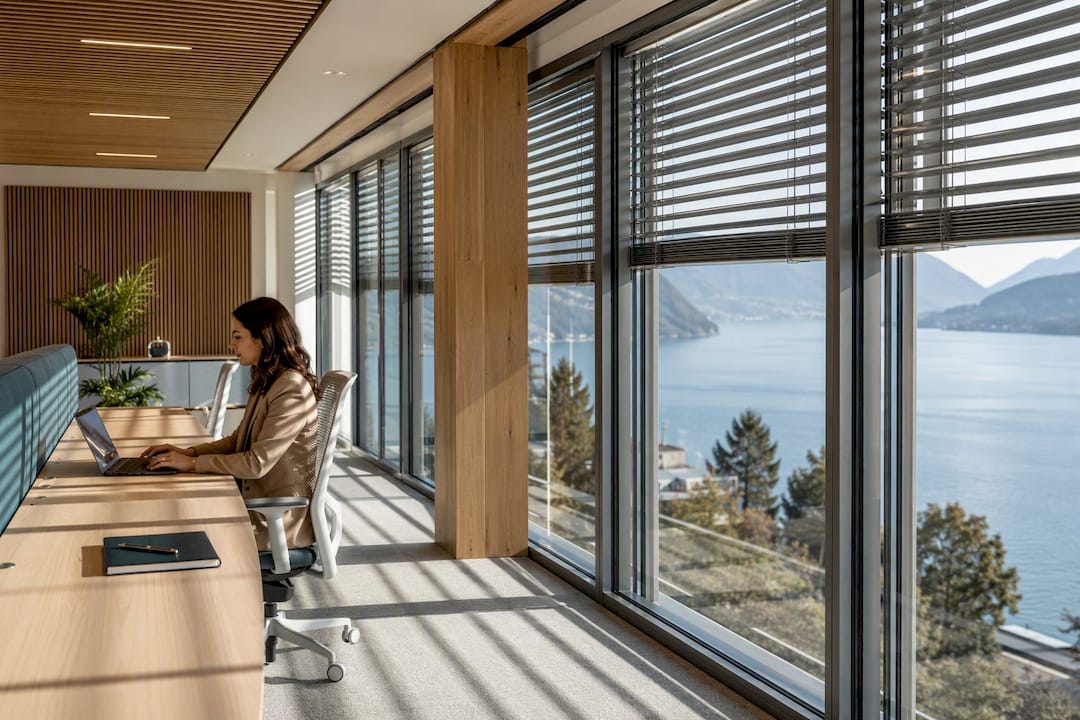
Montreux's status as a lakeside destination town, with a service and hospitality economy sensitive to its own visual identity, also puts pressure on materials choices. Locally sourced timber and stone finishes that echo the region's architectural character tend to fit better with landlord expectations than imported synthetic alternatives, and they typically travel a shorter distance to site, trimming transport emissions on top of the aesthetic fit. Any Montreux fit-out plan should treat the lake, not just the Swiss climate in general, as the starting variable.
Why does sustainable design matter for CSR and brand image in Montreux?
Montreux businesses operate in a town whose economy leans heavily on tourism, hospitality, wealth management and an international events calendar, all sectors where visible values carry commercial weight. A wealth manager or hospitality group headquartered here is judged partly on how its own premises reflect the sustainability commitments it asks clients and partners to take seriously.
A documented sustainable fit-out, Minergie certification, energy monitoring data, a furniture reuse policy, gives CSR reporting something concrete to point to rather than a general statement of intent. That distinction matters when clients, event partners or institutional investors ask for evidence rather than aspiration.
Brand image benefits extend to recruitment and client meetings alike. Visiting clients and prospective hires form an impression of a firm's values within minutes of walking into its office, and a bright, well-ventilated, thoughtfully furnished space signals discipline that a generic open-plan floor doesn't. For businesses competing for talent against firms in Lausanne or Geneva, a workplace that visibly performs on sustainability is a differentiator that costs less to maintain than a marketing campaign designed to say the same thing.
Sustainability in office design fails most often at the handover stage, not the specification stage. A structured project approach, from initial consultation through concept, furniture selection, logistics and completion, helps ensure performance targets set at the concept stage survive contact with real occupancy. That means building post-occupancy checks into the process rather than treating the fit-out as finished once the furniture arrives, and favouring circular procurement, refurbished pieces and reputable manufacturers, where the brief allows it, over defaulting to new. Clients typically gain from that discipline in three ways: tighter cost control against the original budget, measurably higher occupant satisfaction once staff move in, and a fit-out they can point to in CSR reporting with confidence.
— Valerie Vecerova
How Upscale Spaces can help you plan a sustainable fit-out
Whether you're negotiating a new lease, reworking an existing floor, or simply trying to make the case to a board that a sustainable fit-out pays for itself, Upscale Spaces gives Montreux businesses a structured path from concept to completion, without the guesswork of assembling architects, furniture suppliers and logistics partners separately. The firm's office planning and design service covers everything from initial space assessment through furniture selection and installation, drawing on partnerships with manufacturers such as De Sede, Ethnicraft and Lema alongside a network of local Swiss suppliers.
If you're at the start of a lease decision, a short feasibility conversation is the most useful next step: it typically covers a walkthrough of the space, an initial view on where energy and material choices could cut ongoing costs, and a realistic timeline for design and delivery. Get in touch through the office planner page to arrange one.
Sources
- Minergie bei Geschäftsflächen: lohnt sich das?
- Energy, SBS symptoms, and productivity in Swiss open-space offices: Economic evaluation of standard, actual, and optimum scenarios
Recommended
- Basel Office Interior Design Trends for Growing Businesses
- Compact office space solutions for Swiss corporate teams


