
.svg)
How to align office design with brand for impact
Discover how to align office design with brand to boost employee engagement, attract talent, and enhance your company's image. Click for insights!
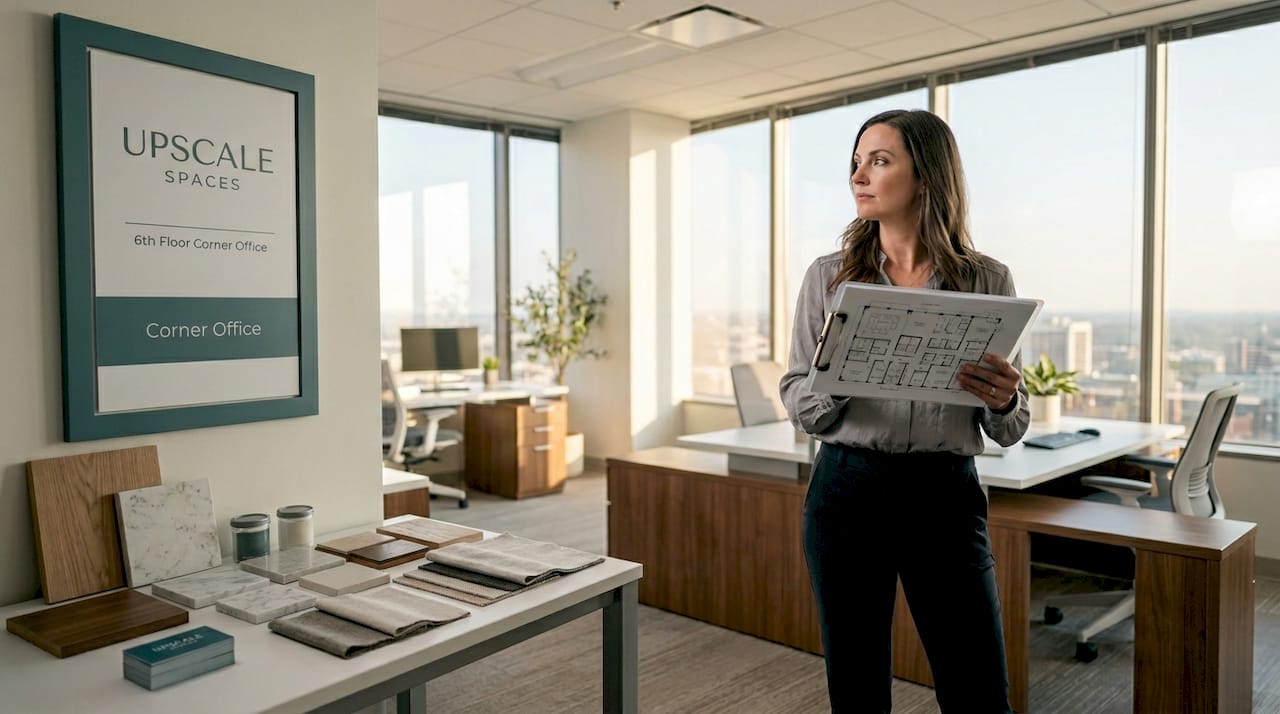
Your office is either working for your brand or against it. Most corporate spaces fall somewhere in the middle: generic, forgettable, and quietly contradicting the values leadership talks about in all-hands meetings. When you fail to align office design with brand, you do not just miss a visual opportunity. You send mixed signals to employees, visitors, and potential hires every single day. This guide walks you through the full process, from auditing what you have to executing design decisions that reinforce who you actually are, with evidence-backed steps built for European corporate decision-makers and facility managers.
Table of Contents
- Understanding the impact of brand-aligned office design
- Preparing your office brand alignment: audit and clarify your identity
- Executing brand-aligned office design: elements and best practices
- Verifying success and avoiding common pitfalls in brand-aligned office design
- A fresh perspective on office design and brand alignment challenges
- Partner with Upscale Spaces for expert brand-aligned office design
- Frequently asked questions
Key Takeaways
| Point | Details |
|---|---|
| Brand alignment drives growth | Aligning your office design with mission-driven branding delivers measurable revenue growth and reduces turnover. |
| Preparation is critical | Clarify your identity and audit your office thoroughly before making design decisions. |
| Design for function and culture | Focus on functional elements like acoustics, lighting, and workflows to foster productivity and reinforce culture. |
| Avoid superficial branding | Subtle and integrated brand elements outperform heavy-handed logo placements that cause visual fatigue. |
| Measure and iterate | Verify effects through surveys and wayfinding audits to avoid common pitfalls and ensure success. |
Understanding the impact of brand-aligned office design
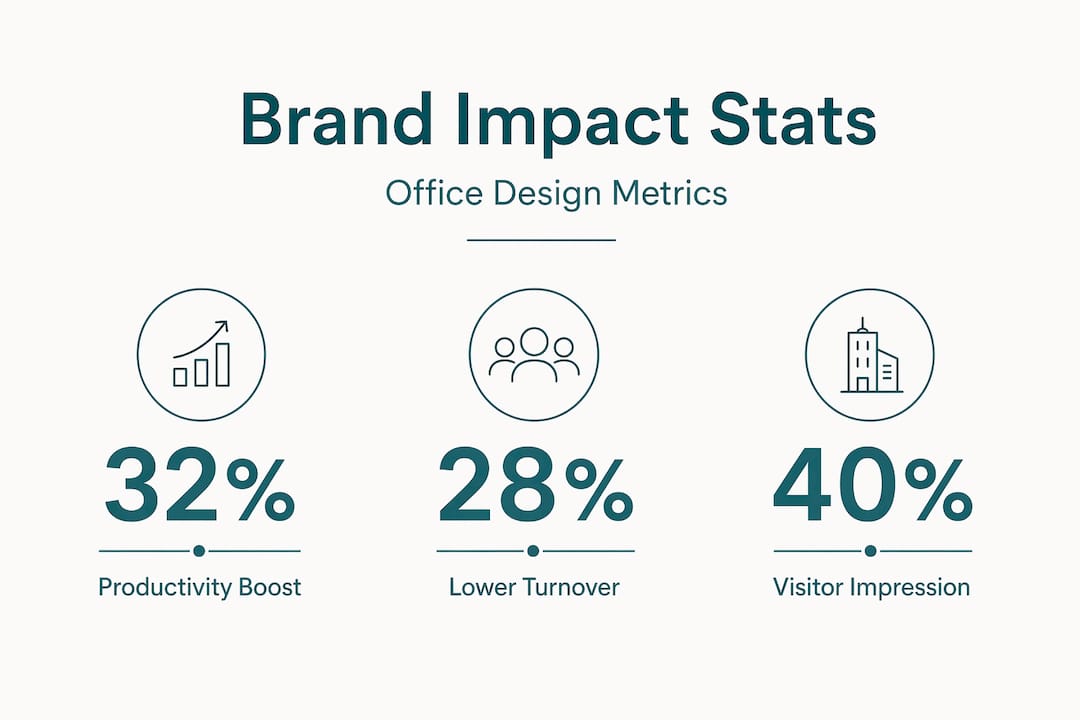
The business case for workspace design alignment is no longer a matter of opinion. Mission-driven design delivers 32% higher revenue growth for companies that prioritize it. That figure reflects something real: when your physical environment communicates what your organization stands for, it reinforces behavior, decision-making, and culture at every level.
The retention argument is equally hard to ignore. Brand-aligned offices reduce employee turnover by approximately 28%. For European corporations dealing with competitive talent markets in cities like Zurich, Berlin, and Amsterdam, that number translates directly into hiring costs avoided and institutional knowledge retained.
Think about what happens when the two are misaligned. A firm that markets itself as collaborative and transparent but assigns everyone to isolated cubicles is not just aesthetically inconsistent. It is telling employees one thing and showing them another. That gap erodes trust faster than almost any management misstep. Understanding your office as your brand means recognizing that every material choice, every layout decision, and every color on the wall is communicating something, whether you planned it or not.
Here is what brand-aligned office design actually delivers when done well:
- Stronger cultural cohesion: Employees understand and embody company values more naturally when the environment reflects them.
- Improved first impressions: Clients and candidates form opinions within seconds of entering your space.
- Reduced onboarding friction: New hires absorb culture faster when the physical environment reinforces it.
- Higher engagement scores: People perform better in spaces that feel purposeful and intentional.
“Your office is not just a place to work. It is a three-dimensional expression of your brand that operates 24 hours a day, communicating your values to everyone who walks through the door.”
Having established why brand alignment is critical, next we explore what you need to prepare before redesigning your office.
Preparing your office brand alignment: audit and clarify your identity
Before any furniture gets moved or a single wall gets painted, leadership should clarify what the organization stands for and how employees should feel at work. This sounds obvious. It almost never happens. Most office refreshes start with a mood board instead of a mission conversation, which is why so many redesigned offices look polished but feel hollow.
Start with these foundational questions:
- What three words should an employee use to describe working here?
- What do your best clients say about your culture after visiting your office?
- Where does your current space contradict your stated values?
- What behaviors does your layout currently reward or discourage?
- Which areas do employees avoid, and why?
Once you have those answers, conduct a physical audit. Walk through your space as if you are a new employee on day one, or better yet, a prospective client. Evaluate each zone against your brand criteria.
Key areas to audit in detail:
- Reception and entrance: Does it communicate your brand personality immediately, or is it generic?
- Meeting rooms: Do they support the kind of collaboration or focused work your brand promises?
- Wayfinding and signage: Is it clear, consistent, and on-brand, or an afterthought?
- Common areas: Do they reflect your culture, or do they feel like a hotel lobby that belongs to no one?
- Individual workstations: Do they support the actual workflows of your teams?
Exploring corporate office design principles and modern office concepts at this stage helps you benchmark your audit findings against what is actually possible and proven.
Pro Tip: Photograph every zone during your audit and annotate each image with a single word describing the brand message it currently sends. The gap between those words and your intended brand values is your design brief.
With a clear understanding of your brand and current office strengths and weaknesses, you can proceed to design execution.
Executing brand-aligned office design: elements and best practices
This is where corporate identity in design becomes tangible. The most common mistake at this stage is defaulting to logo placement as the primary branding tool. It is not. Subtle brand cues build recognition without fatigue, while heavy-handed logo repetition numbs people to the brand rather than reinforcing it.
Effective integrating brand into office design works through materials, textures, spatial proportions, color palettes, and environmental graphics that tell a story. A law firm emphasizing precision and trust might use clean lines, dark wood, and muted tones. A fintech startup positioning itself as agile and transparent might use open sightlines, glass partitions, and bold accent colors from the brand palette.
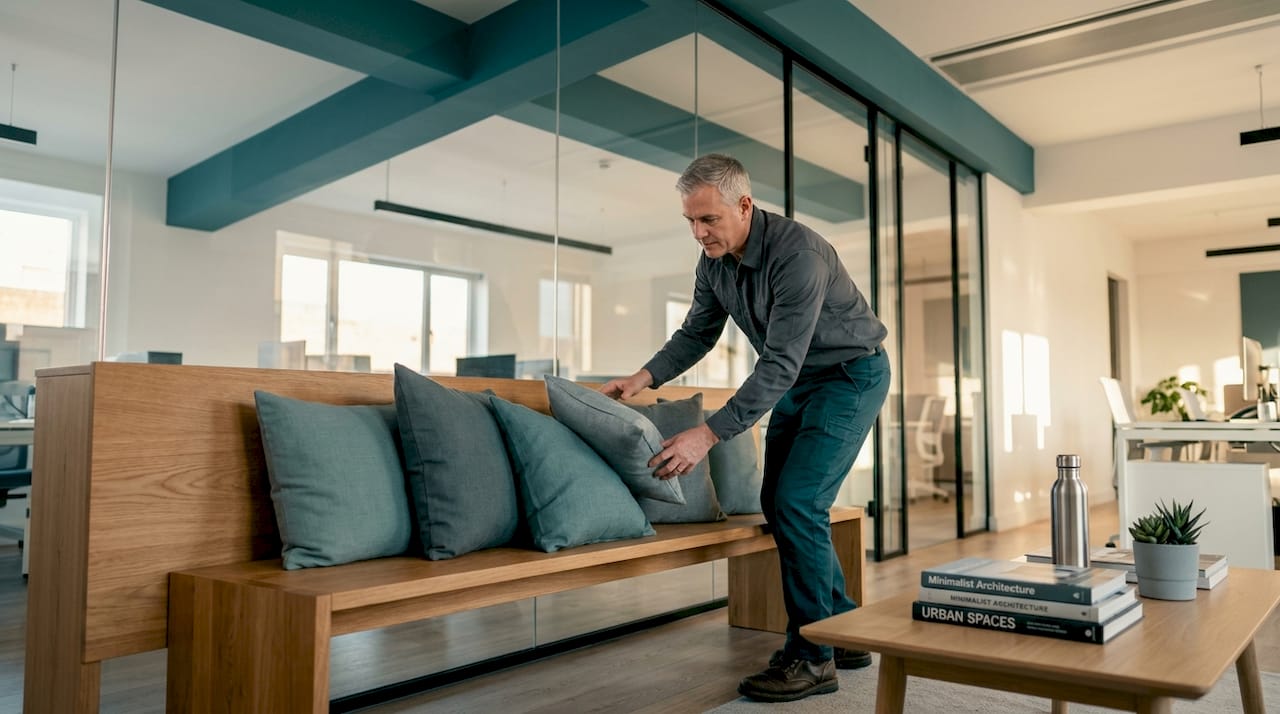
Here is how the two major design approaches compare:
| Design approach | Best for | Brand signal | Productivity impact |
|---|---|---|---|
| Activity-based zones | Collaborative, agile brands | Openness, trust, flexibility | High for creative roles |
| Enclosed focus spaces | Precision-driven, analytical brands | Depth, expertise, discretion | High for deep-work roles |
| Hybrid layout | Balanced, people-first brands | Adaptability, employee care | High across most roles |
| Branded environmental graphics | Culture-forward brands | Storytelling, identity | Moderate, supports engagement |
Functional design variables matter as much as aesthetics. Acoustics, lighting, and natural elements increase productivity significantly when designed with intention. Poor acoustics in an open plan office can reduce cognitive performance by up to 66%. Lighting that mimics natural daylight cycles reduces fatigue and improves focus. These are not nice-to-haves. They are the foundation of a space that performs.
Key execution priorities for integrating brand into office design:
- Color: Use your brand palette strategically. Accent walls, upholstery, and soft furnishings carry color better than painted corridors.
- Materials: Select surfaces that communicate your brand’s character. Raw concrete reads differently than warm oak. Both can be on-brand depending on who you are.
- Environmental graphics: Commission bespoke artwork or typographic installations that tell your company story without repeating your logo.
- Lighting: Layer ambient, task, and accent lighting. Natural light should be maximized wherever possible.
- Biophilic design: Plants, living walls, and natural materials reduce stress and signal care for employee well-being, a powerful brand statement in itself.
- Acoustic management: Panels, soft furnishings, and spatial planning all contribute to a sound environment that supports focus.
For roles requiring deep concentration, designing an individual office with proper acoustic separation and ergonomic support is a direct investment in output quality.
Pro Tip: Commission a brand narrative document before briefing your interior designer. It should describe the sensory experience you want people to have, not just the visual one. Smell, sound, and texture are all part of how to reflect brand in office environments.
After implementing these design features, the next step is verifying their effectiveness and addressing common challenges.
Verifying success and avoiding common pitfalls in brand-aligned office design
Office design brand impact does not announce itself. You need to measure it deliberately. Most organizations skip this step entirely, which means they cannot tell whether the investment worked or where it fell short.
Start measuring within 60 to 90 days of completing your redesign. Use a combination of quantitative and qualitative tools.
Recommended measurement methods:
- Employee surveys: Ask specifically about brand clarity, sense of belonging, and how well the space supports their work. Benchmark against pre-redesign scores.
- Visitor feedback forms: Ask clients and candidates what impression the office gave them. Compare responses to your intended brand positioning.
- Space utilization data: Track which zones are used most and least. Underused spaces often signal a mismatch between design intent and actual work patterns.
- Absenteeism and retention metrics: Track changes over a 6 to 12 month window post-redesign.
Misaligned office layouts send contradictory culture messages and erode trust, which is why verification is not optional. If your survey data shows employees feel the space does not reflect your stated values, that is actionable intelligence, not a failure.
Wayfinding deserves its own audit cycle. 40% of visitors form a negative brand impression if they struggle to find destinations in the first three minutes. Signage that is unclear, inconsistent, or visually disconnected from your brand identity is a liability. Review it the way you would review your website navigation.
| Common pitfall | Why it happens | How to avoid it |
|---|---|---|
| Logo overload | Mistaking branding for decoration | Use brand values, not just brand marks |
| Ignoring acoustics | Focusing on visuals only | Include acoustic design in the initial brief |
| Trend-chasing layouts | Following what looks current | Design for your actual workflows |
| Skipping the audit | Rushing to execution | Always start with a structured assessment |
| Neglecting wayfinding | Treating it as a facilities task | Integrate signage into the design brief |
Staying current with office design trends is useful context, but the best-performing offices are designed around organizational identity, not trend cycles.
Having reviewed verification techniques, we now offer a fresh perspective on office design and brand alignment challenges.
A fresh perspective on office design and brand alignment challenges
Here is something most design briefs will not tell you: the biggest threat to a successful brand-aligned office is not bad taste. It is over-confidence in visual identity as a substitute for spatial thinking.
We see it regularly. A company invests in a full rebrand, updates its logo, refreshes its color palette, and then briefs an interior designer to “make the office match.” The result is a space that looks like the brand but does not feel like it. The logo appears on six walls. The brand colors are everywhere. And employees still feel like they are working in someone else’s space.
That disconnect happens because visual identity and spatial identity are different disciplines. A logo communicates in two dimensions. A workspace communicates through movement, sound, light, and the way people feel when they sit down to do their best work. Treating them as equivalent is where most office branding strategies fall apart.
The counterintuitive truth is that the offices with the strongest brand alignment are often the ones where you cannot immediately identify the logo. What you feel instead is a coherent set of values expressed through every material and spatial decision. That is the difference between decorating and designing.
The other insight worth naming: layout is a cultural statement. An organization that says it values collaboration but gives its senior leaders enclosed corner offices with closed doors is not just making an aesthetic choice. It is making a power statement that employees read clearly. Your office as your brand means that every hierarchy embedded in the floor plan is visible to everyone who works there.
The solution is to bring branding experts, architects, and facility managers into the same conversation at the start, not in sequence. When those disciplines collaborate from the first brief, the result is a space that performs as a unified whole rather than a collection of well-intentioned decisions that never quite add up.
Partner with Upscale Spaces for expert brand-aligned office design
Translating brand identity into a physical workspace that actually performs requires more than good taste. It requires a process.
At Upscale Spaces, we work with European corporations, private equity firms, and growing businesses to design offices that reflect who they are and support how they work. Our end-to-end process covers everything from the initial brand and workflow audit through concept design, furniture selection with premium manufacturer partners, logistics, and final installation. You can explore our network of office designers across Zurich, Berlin, Munich, and beyond, or browse completed family office projects for a sense of what brand-aligned design looks like in practice. When you are ready to move from audit to execution, our office interior design team is ready to build a brief around your identity.
Frequently asked questions
Why is aligning office design with brand important for employee productivity?
Brand-aligned office design creates a cohesive environment that supports employee engagement and well-being. Strategic office design incorporating brand elements leads to a 20% increase in employee productivity.
What are common mistakes when trying to align office design with brand?
The most damaging mistake is treating branding as decoration rather than a spatial strategy. Most organizations approach office updates as décor projects rather than strategic initiatives, which means workflows and culture go unaddressed.
How can wayfinding impact brand perception in an office?
Poorly designed wayfinding frustrates visitors and signals disorganization before a single conversation happens. 40% of visitors form a negative impression if they struggle to find destinations in the first three minutes.
What role does biophilic design play in brand-aligned offices?
Biophilic design signals that an organization genuinely values its people, which reinforces culture as much as it improves well-being. Biophilic elements in brand-aligned workspaces boost productivity by 6% and creativity by 15%.


