
.svg)
Compact office space solutions for Swiss corporate teams
Discover essential examples of compact office space solutions for Swiss teams. Learn how to optimize your workspace for collaboration and focus!
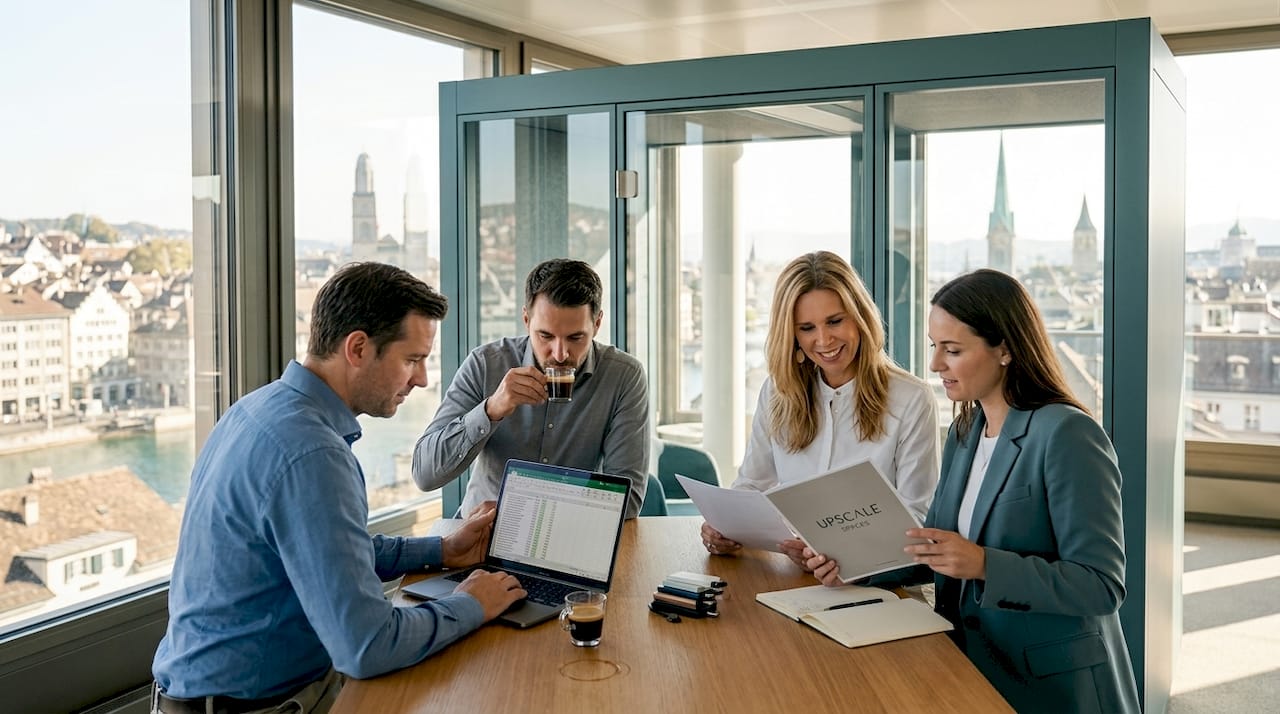
Swiss corporate offices in cities like Zürich, Geneva, and Basel face a specific tension: real estate is expensive, design expectations are high, and employees increasingly expect workspaces that support both focused work and collaboration. Choosing from the growing range of examples of compact office space solutions means weighing acoustic performance, ergonomic quality, flexibility, and visual appeal, all within a footprint that may not give you much room to experiment. This article walks you through the criteria that matter most, then showcases specific solutions so you can make a confident, informed decision.
Table of Contents
Key Takeaways
PointDetailsEvaluate key criteriaFocus on acoustics, ergonomics, natural light, flexibility, and sustainability when choosing compact office solutions.Choose modular solutionsModular pods and cubicles provide adaptability and efficient space use in Swiss corporate offices.Prioritize acoustic privacyAcoustic rated pods ensure confidentiality and reduce distractions in open or compact office layouts.Incorporate biophilic elementsNatural light and greenery boost productivity and creativity in compact workspaces.Leverage professional designPartner with experts like Upscale Spaces for seamless compact office implementations tailored to Swiss standards.
Key criteria for evaluating compact office space solutions
Before you compare products or request quotes, you need a clear framework. Not every compact workspace example will suit your team size, work style, or building constraints. Evaluating solutions against consistent criteria saves time and prevents costly mismatches.
Here are the core criteria to apply when assessing any compact office solution:
Having established the key evaluation criteria, let’s explore concrete examples of compact office space solutions that embody these principles.
Modular collaboration pods for team work and privacy
When your team needs a confidential group meeting but your office lacks enclosed rooms, a modular collaboration pod fills that gap without permanent construction. The Eco Team XL by Ecolution Design is one of the most capable examples in this category.
The Eco Team XL accommodates 6 to 8 participants, delivers Class A 30.2 dB acoustic performance, and provides 283.2 CFM ventilation for extended sessions. That ventilation spec matters more than most buyers realize: pods without adequate airflow become uncomfortable within 30 minutes, which shortens meetings and reduces the solution’s practical value.
Key features that make this pod relevant to Swiss corporate environments:
For soundproofing your office more broadly, pods work best when placed away from HVAC vents and high-traffic corridors.
Pro Tip: Choose pods with integrated USB and HDMI ports to eliminate the adapter chaos that slows down hybrid meetings. Teams in Geneva and Lausanne running frequent cross-border video calls will feel this benefit immediately.
Beyond collaboration pods, compact offices can benefit from integrated focused workstations and hot-desking pods, as seen with other innovative solutions.
Compact office pods and hot-desking tables for flexible focus work
Not every compact workspace need involves a group. Much of the productivity lost in open-plan offices comes from individuals struggling to find a quiet spot for calls, deep work, or confidential tasks. This is where single and small-group office pods deliver real value.
PersyBooths’ compact office pods support co-working floors with integrated desks and seating, installable anywhere to enhance focus work. The Persy Two and Persy Four models create self-contained booths that fit within the existing floor plan without requiring permits or structural changes.
Key advantages for Swiss offices:
To implement hot-desking pods effectively, follow these steps:
Reviewing your shared desk strategies before installation helps you avoid over-purchasing and ensures each pod earns its floor space. You can also draw inspiration from broader compact office design ideas when planning the surrounding layout.
Another innovative direction is Swiss-designed modular microarchitecture systems that adapt fluidly to changing office needs.
Swiss modular microarchitecture solutions: Talky Village system
Talky Village, developed by STUIQ AG in Zürich and launched in 2025, represents a distinctly Swiss approach to the compact office challenge. Rather than offering a single pod product, it delivers a modular microarchitecture system: a collection of focus pods, acoustic nooks, zoning dividers, and functional add-ons that combine to reshape how an office floor operates.
Talky Village uses 45% recycled materials, is 99% recyclable, and is modular and expandable without rebuild, which means your initial investment does not become obsolete when your team grows or reorganizes. This is a meaningful distinction from fixed partition systems, which require construction work and generate significant waste when removed.
Key features of the Talky Village system:
Stephan Hürlemann, the Swiss architect behind Talky Village, has described the system’s design philosophy this way:
“The office of the future is not a fixed floor plan with furniture inside it. It is a collection of adaptable microspaces that respond to how people actually work, not how planners assumed they would.”
You can see how this philosophy connects to broader modern office concepts that prioritize agility over permanence.
Complementing these solutions, modular cubicles present a distinct approach to compact office spatial efficiency.
Modular workstation cubicles for adaptable layouts and privacy
For Swiss firms that need defined individual workstations rather than shared pods, modular cubicles offer a middle ground between open benching and full private offices. Modular workstation cubicles increase space efficiency by 20 to 30 percent over fixed desks and offer private options for managers, according to Cubicle By Design’s 2025 analysis.
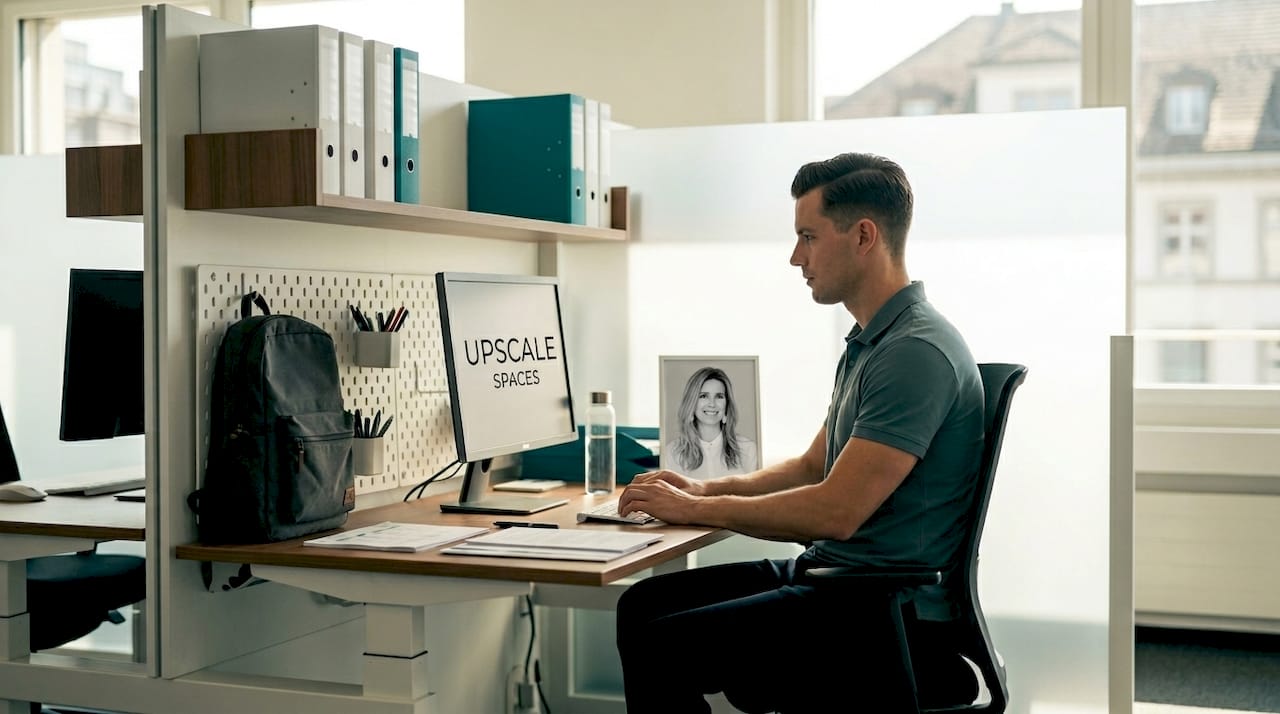
The key advantage is reconfigurability. When a team in Basel expands from eight to twelve people, modular cubicle panels rearrange to accommodate the change without demolition. When a project requires a temporary private office, panels with sound-dampening fabric create that space in hours.
Solution typeSpace efficiencyAcoustic privacyFlexibilityNatural lightModular cubiclesHighMediumHighModeratePrivate cubiclesMediumHighLowLowGlass partitionsHighLowMediumHighBenching desksVery highVery lowHighHigh
Glass partitions deserve a specific mention here. They preserve the visual openness and natural light that support employee wellbeing, while still defining zones clearly. For offices in Küsnacht or Zollikon where the surrounding landscape is part of the appeal, glass partitions keep that connection intact.
Pro Tip: Maximize vertical storage within cubicle panels. Wall-mounted shelves, pegboards, and overhead bins free up desk surface area and reduce the visual clutter that makes compact spaces feel smaller than they are.
For guidance on designing an individual office within a larger floor plan, consider how panel height affects both privacy and light distribution before specifying your cubicle configuration.
Let’s now compare these office solutions to clarify which best fits various corporate needs and Swiss office contexts.
Comparing compact office space solutions: features, benefits, and use cases
With four distinct solution types on the table, the decision comes down to your specific context. Here is a direct comparison across the criteria that matter most to Swiss corporate decision-makers.
SolutionSpace efficiencyAcoustic ratingSustainabilityBest use caseEco Team XL podMediumClass A, 30.2 dBHigh (recycled fabrics)Confidential group meetingsPersyBoothsHighStrongMediumFocus work, hybrid hot-deskingTalky VillageVery highRoom-level improvementVery high (99% recyclable)Agile teams, open-plan zoningModular cubiclesHighMediumMediumIndividual workstations, growing teams
A few scenario-specific recommendations:
The trade-off between fixed and movable solutions is real. Pods offer superior acoustic performance but occupy a fixed footprint. Talky Village modules move freely but require thoughtful placement to avoid creating circulation bottlenecks. For working in open office environments, combining two or three solution types often produces better results than committing entirely to one.
A Swiss perspective on compact office space solutions: function meets culture
Here is something most articles on this topic avoid saying directly: Swiss corporate offices are not just workplaces. They are expressions of organizational values. When a client walks into your Zürich office and sees a well-considered, acoustically refined, sustainably furnished space, they draw conclusions about how you run your business. That is not a soft benefit. It is a reputational asset.
This is why the compact office conversation in Switzerland is different from the same conversation in other markets. It is not primarily about saving money per square meter, though that matters. It is about maintaining design quality and environmental integrity within a smaller footprint. Modular systems reduce office conversion costs and downtime while adapting economically to team changes, which means the financial case and the design case point in the same direction.
The mistake we see most often is treating compact office solutions as a cost-reduction exercise rather than a design opportunity. Teams in Arosa or St. Gallen who were consulted during the design process and given solutions that reflect their actual work patterns report higher satisfaction than teams who received a beautifully specified fit-out that ignored how they actually spend their days.
Acoustic quality and sustainability are not premium add-ons in Swiss corporate culture. They are baseline expectations. Any solution that falls short on either dimension will face internal resistance, regardless of how well it photographs. The modern office concepts that perform best in Swiss environments are those that treat acoustic comfort and environmental responsibility as design constraints from the start, not features to be added if the budget allows.
Pro Tip: Involve employees from different office locations, whether Basel, Zug, or Davos, in early design conversations. People who contribute to a decision accept its outcomes more readily, and they often surface practical constraints that planners miss entirely.
How Upscale Spaces supports your compact office transformation
At Upscale Spaces, we work with corporate clients across Switzerland to design and implement compact office environments that perform as well as they look. Our process covers everything from initial space assessment and furniture selection to logistics and project completion, so your team experiences minimal disruption during the transition.
Our office design specialists bring direct experience with modular pods, microarchitecture systems, and cubicle configurations in Swiss corporate settings. We source sustainable materials, coordinate with manufacturers, and manage installation timelines for offices in cities from Geneva to St. Gallen. If you want to see the quality of work we deliver, our single family office project is a strong reference point for the level of detail and craftsmanship we bring to every engagement. Contact us to discuss your space and schedule a consultation.
Frequently asked questions
What is the best compact office solution for small Swiss corporate teams?
Modular collaboration pods or compact office pods like Eco Team XL, which accommodates 6 to 8 participants with Class A acoustics, offer flexible and acoustically protected spaces ideal for small teams in Swiss offices. PersyBooths are a strong alternative for teams that prioritize individual focus work alongside occasional small-group use.
How do modular office solutions improve space efficiency?
Modular workstation cubicles increase space efficiency by 20 to 30 percent over fixed desks by allowing flexible layouts that adapt to changing team sizes and maximize usable floor area. Microarchitecture systems like Talky Village push this further by eliminating the need for permanent partitions entirely.
Are sustainable materials common in compact office solutions in Switzerland?
Yes, and Swiss corporate buyers increasingly expect them. Talky Village uses 45% recycled materials and is 99% recyclable, while Eco Team XL incorporates locally sourced recycled fabrics and laminates, both reflecting the environmental standards Swiss firms apply to procurement decisions.
How important is acoustic privacy in compact offices?
Acoustic privacy is critical, particularly for legal, finance, and HR functions where confidentiality is a compliance requirement. ISO 23351-1 Class A rated pods reduce speech noise by over 30 dB, which is the threshold at which conversations become genuinely private in an open-plan setting.
Can compact office solutions support hybrid work models?
Yes. PersyBooths and Talky Village modules both provide flexible, bookable workspaces that serve hybrid teams needing quiet zones for calls and focused tasks. Pairing these solutions with a desk reservation platform ensures equitable access across teams with variable attendance patterns.


